Recipe · Thailand · The Royal Fruit Salad
Yam Som O (ยำส้มโอ)
Pomelo segments tossed with roasted coconut, dried shrimp and fried shallots in a palm-sugar, tamarind and coconut-cream dressing — sweet first, sour after.
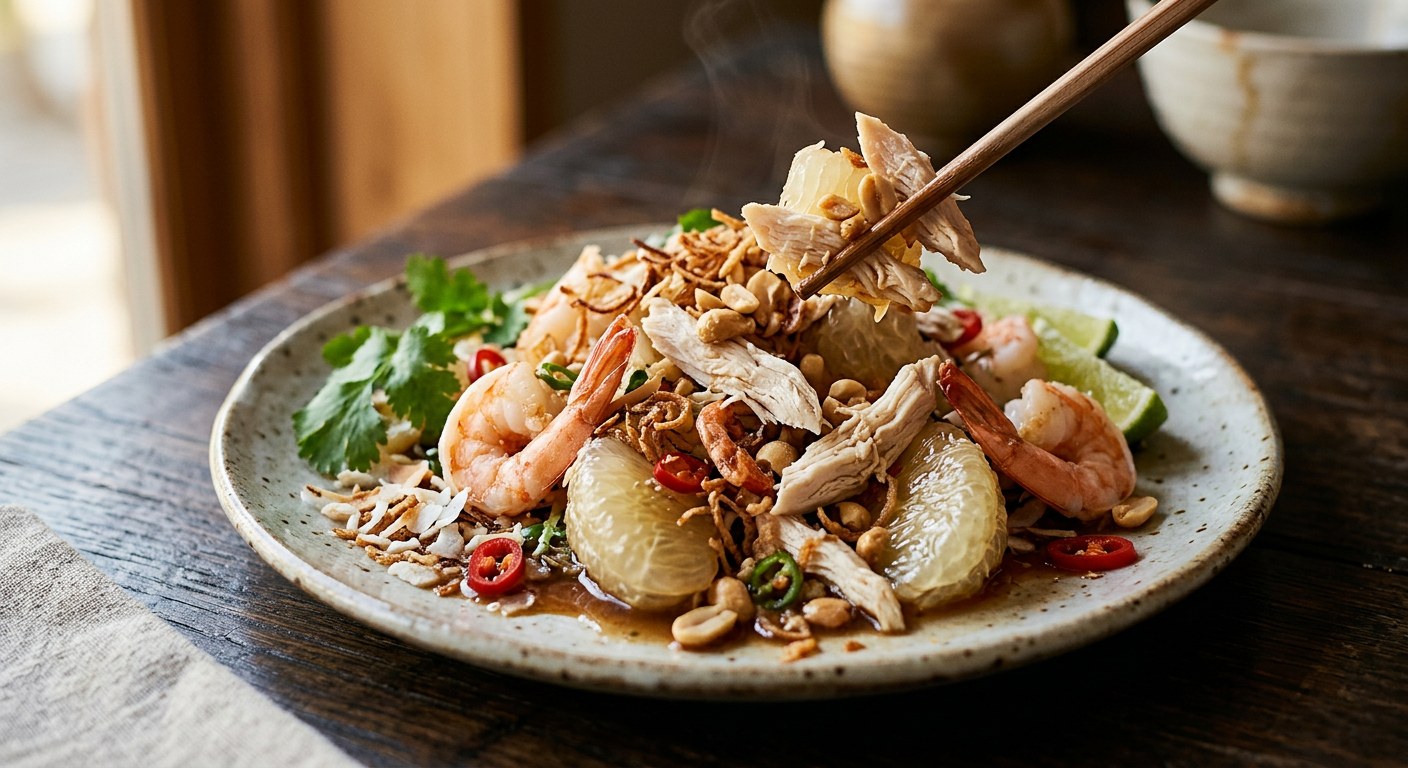
Pomelo segments tossed with roasted coconut, dried shrimp and fried shallots in a palm-sugar, tamarind and coconut-cream dressing — sweet first, sour after.
Pholfoodmafia puts the origin in one line: Thai wisdom says that when the pomelo in the house is not sweet enough, you stop eating it and start cooking it — the texture of the fruit becomes the star of a yam. The result is the most luxurious of the Thai salads: strands of pomelo holding a sweet-sour dressing between their cells, against a crunch of roasted coconut, dried shrimp, peanuts and fried shallots.
The dressing is where the recipes split into two schools. The old school simmers it — palm sugar, fish sauce and tamarind water melted together over heat, with BlogGang and Kapook stirring in coconut cream that has been bubbled without splitting. The quick school stirs it cold — Maggi's version is nam prik pao, lime juice and palm sugar in a bowl, no heat at all.
The recipe here is BlogGang's ยำส้มโอโบราณ, a family version of the dish as served at the old เมธาวลัย ศรแดง on Ratchadamnoen: river prawns boiled in the shell for their colour, shredded chicken breast, and the instruction every good version shares — tear the pomelo gently, toss it gently, and taste for sweet first, sour after, never salty. Maggi adds the shopping rule: pick a pomelo with dry, firm flesh — ขาวใหญ่, ขาวน้ำผึ้ง or ขาวแป้น — so the segments hold their shape instead of collapsing into the dressing.
| Thai | English | Amount |
|---|---|---|
| เนื้อส้มโอ | Pomelo flesh | 6 segments |
| กุ้งชีแฮ้ | River prawns | 100 g |
| อกไก่ต้ม ฉีกเป็นเส้น | Chicken breast, boiled and shredded | to taste |
| น้ำพริกเผา | Roasted chilli jam (nam prik pao) | 2 tbsp |
| น้ำตาลปี๊บ | Palm sugar | 2 tbsp |
| น้ำปลา | Fish sauce | 2 tbsp |
| น้ำมะนาว | Lime juice | 2 tbsp |
| น้ำมะขามเปียก | Tamarind water | 2 tbsp |
| หัวกะทิ | Coconut cream | ¼ cup |
| น้ำเปล่า | Water | 1 tbsp |
| พริกขี้หนูแห้งคั่ว | Dried bird's eye chillies, roasted | 5 |
| มะพร้าวขูดคั่วป่น | Coconut, grated, roasted and pounded | 2 tbsp |
| เคยคั่ว (กุ้งฝอยคั่วกรอบ) | Crisp-fried dried shrimp | 2 tbsp |
| ถั่วลิสงคั่วบุบหยาบ | Peanuts, roasted and roughly crushed | 2 tbsp |
| หอมเจียว | Fried shallots | 2 tbsp |
| กระเทียมเจียว | Fried garlic | 2 tbsp |
The chef's version (Pholfoodmafia): 2 cups pomelo, 8 blanched diced prawns, 4 tbsp roasted coconut — dressing pounded from roasted chillies, shallots and garlic with smoked catfish, then simmered with 3 tbsp palm sugar, fish sauce and tamarind. The quick version (Maggi): 200 g pomelo, 300 g blanched prawns, cashews instead of peanuts — a cold nam-prik-pao-and-lime dressing, no simmering. The roasted-paste version (Aroifin): 300 g pomelo with a pounded paste of roasted dried chilli, dried shrimp and roasted shallot and garlic, plus makrut leaf shreds.
Simmered or stirred dressing. Four sources simmer the palm sugar, fish sauce and tamarind into a dressing; Maggi stirs it cold — chilli jam, lime and palm sugar, no heat. The simmered dressing is deeper and keeps; the cold one is a five-minute lunch.
Coconut cream. Only BlogGang and Kapook bubble coconut cream and fold it into the dressing. The other three keep the dressing clear. The cream makes the salad richer and slightly blurry; the clear dressing shows the pomelo's colour.
Where the sourness comes from. Everyone but Maggi uses tamarind water; Pholfoodmafia and Aroifin stop there, while BlogGang, Kapook and Maggi also squeeze in lime. Tamarind-sour is round; lime-sour is sharp — the old-school plates like both.
The umami base. Pholfoodmafia pounds smoked catfish into the dressing; Aroifin pounds roasted dried chilli, dried shrimp and roasted shallot and garlic into a paste; BlogGang and Kapook rely on chilli jam straight from the jar. Same idea, three intensities.
Chicken. BlogGang and Kapook add shredded chicken breast alongside the prawns — the royal version's second protein. The others are prawn-only. Kapook notes minced pork or blanched squid work just as well.
The crunch set. Cashews belong to Maggi alone; makrut leaf shreds to Pholfoodmafia and Aroifin alone. Peanuts, roasted coconut and dried shrimp are the trio nobody drops.
Sweetness. Pholfoodmafia runs 3 tbsp of palm sugar to 2 tbsp fish sauce — noticeably sweeter than BlogGang's and Aroifin's equal 2-and-2. The chef's version leans dessert; the home versions lean savoury.
This recipe is translated from the following Thai-language sources. Where they disagree, we've said so.
1. BlogGang — "ยำส้มโอโบราณ" by บ่งบ๊ง (the recipe used here; via เมธาวลัย ศรแดง, Ratchadamnoen) — bloggang.com
2. Pholfoodmafia — "Pomelo Salad (ยำส้มโอ)" by พล ตัณฑเสถียร (the smoked-catfish dressing) — pholfoodmafia.com
3. Maggi TH — "สูตร ยำส้มโอ พร้อมวิธีทำ เมนูรสแซ่บจัดจ้าน อร่อยครบรส" (the quick cold dressing) — maggi.co.th
4. Kapook — "ยำส้มโอกุ้งสด หวานอมเปรี้ยวกินแล้วสดชื่น" (the coconut-cream picture recipe) — cooking.kapook.com
5. Aroifin — "วิธีทำยำส้มโอ สูตรโบราณ ทำง่าย แซ่บแบบไทยแท้!" (the roasted-aromatic paste version) — aroifin.com