Recipe · Thailand · The Omelette That Must Puff

Thai Omelette (ไข่เจียว)

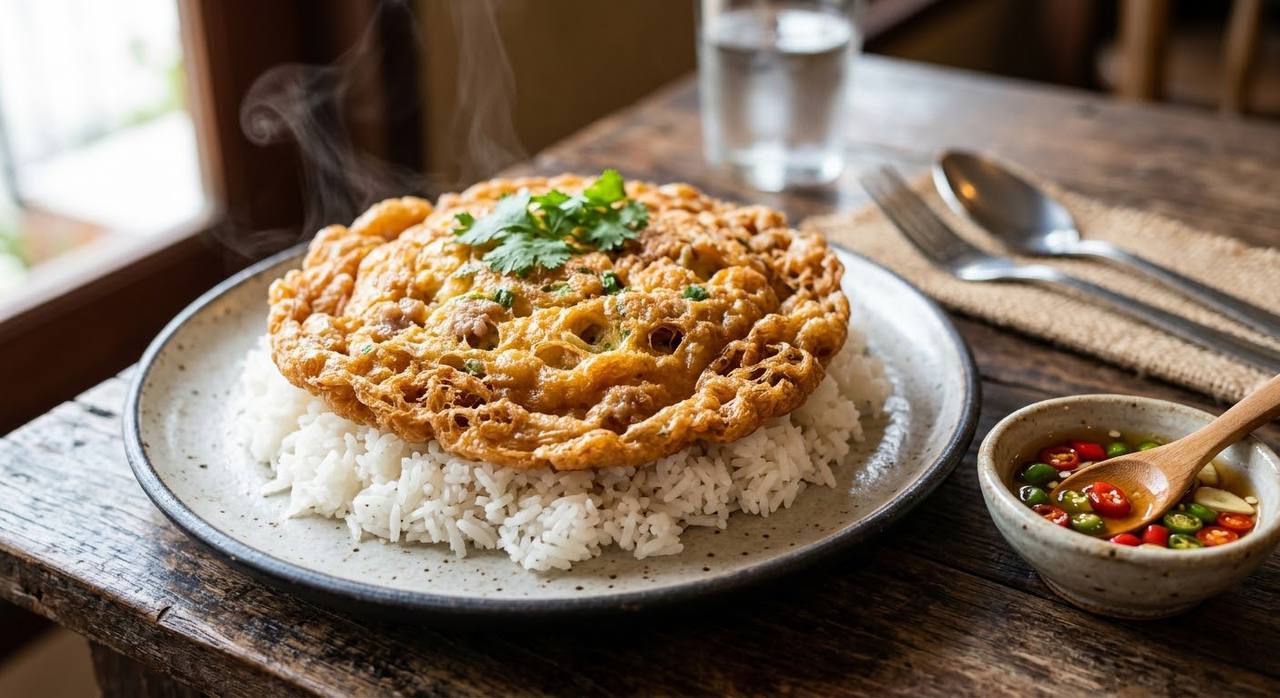
ไข่เจียว means "fried egg" — but not the folded French kind. Whisked to a froth, fried in oil deep enough to puff, crisp at the rim and soft in the middle, over rice with chilli fish sauce.

Thai omelette (ไข่เจียว) — golden, crisp-edged Thai omelette over rice

The Omelette That Must Puff

Every Thai kid learns ไข่เจียว before anything else — it's the first dish, the fallback, the thing you eat with rice when there's nothing else to eat with rice. And its standard is not gentle: the omelette should arrive puffed and golden, the rim crisp and lacy, the middle still soft, sitting on a plate of hot jasmine rice. A flat, soft-curd omelette isn't khai jiao — it's a missed opportunity.

Two things earn the puff. One: the eggs are whisked with a fork — Thai cooks are specific about this, the fork's gaps beat in more air than a spoon — until genuinely frothy. Two: the oil is hot and plentiful, so the froth sets the instant it lands instead of soaking. Restaurant cooks pour the egg in as a thin spiral from height, trapping still more air, then crank the heat at the end to push the oil back out.

And the second half of the dish isn't on the plate — it's น้ำปลาพริก, prik nam pla: fish sauce, sliced chillies and lime, spooned over at the table. The omelette is the canvas; the chilli fish sauce is the flavour. It's the same condiment that finishes khao pad — the Thai kitchen's answer to salt and pepper.

The Recipe (minced-pork version — serves 2)

ThaiEnglishAmount
ไข่ไก่Eggs4
หมูสับ (ลวกสุก)Minced pork, blanched — the sources split, see below½ cup
น้ำปลาFish sauce — or 1 tbsp white soy + 1 tbsp oyster sauce½ tbsp
น้ำมันNeutral oil, for frying200 ml
The prik nam pla (น้ำปลาพริก)
น้ำปลาFish sauce2 tbsp
พริกขี้หนู (ซอย)Thai chillies, sliced3–5
มะนาวLime wedge1
ข้าวสวยJasmine rice, to serveas liked

The Method

  1. Froth. Eggs whisked hard with the fish sauce until genuinely frothy — a fork, not a whisk. The air is the whole trick.
  2. Pork in. The blanched minced pork folded through.
  3. Hot oil. Medium-high heat. The oil must be properly hot — that's what puffs the egg instead of greasing it.
  4. Pour. A thin spiral from a height if you want the restaurant's extra puff, then stir the centre briefly so the middle cooks.
  5. Flip. When the bottom is set and golden, turn it carefully; finish the second side, then raise the heat briefly at the end to drive the oil back out.
  6. Drain and plate. Paper towel, then onto hot jasmine rice.
  7. The sauce. Fish sauce, sliced chillies and a squeeze of lime in a small bowl — spooned over at the table, not stirred in the kitchen.

Where Thai Sources Disagree

Raw or blanched pork. Kapook blanches the minced pork first, so the middle of the omelette is never raw; the Wongnai version mixes it in raw. For a thick omelette, the blanch is the safer play.

The seasoning. Fish sauce alone (Kapook) against white soy plus oyster sauce plus seasoning powder (Wongnai). Both are published; the fish-sauce version tastes cleaner, the soy version rounder.

How much oil. Kapook commits to 200 ml — a shallow deep-fry, effectively; Wongnai pan-fries in four tablespoons. The deep version puffs dramatically; the shallow one is tamer. The recipe above keeps the oil and the fork, and lets you choose the courage.

Egg count. Four to six for two people, depending on appetite. Thai omelettes are generous by design.

Add-ins. Minced pork is the standard, but Thai cooks happily swap in prawns, crab, or nothing — and fold in spring onion, holy basil or Thai basil instead. The technique stays identical.
How Western Versions Get It Wrong

UK Ingredient Notes

Sources

This recipe is translated from the following Thai-language sources. Where they disagree, we've said so.

1. Kapook — "ไข่เจียวหมูสับ เมนูไข่ฟูกรอบนุ่ม ไม่อมน้ำมันไม่ติดกระทะ" (the hot-oil deep-fry method with blanched pork) — cooking.kapook.com

2. Wongnai (tata) — "สูตร ไข่เจียวหมูสับ พร้อมวิธีทำ" (the soy-oyster seasoning version) — wongnai.com

3. aroifin — "วิธีทำ ไข่เจียวหมูสับ ให้ฟูกรอบ เมนูง่าย ๆ ที่ใครกินก็ติดใจ" (the spiral pour, the fork, and the end-of-fry heat trick) — aroifin.com

Johnny Tiger
Johnny researches and translates Thai recipes from Thai-language sources — chefs, restaurants and home cooks in Thailand — and publishes them with their sources cited. No westernised shortcuts, no invented steps.