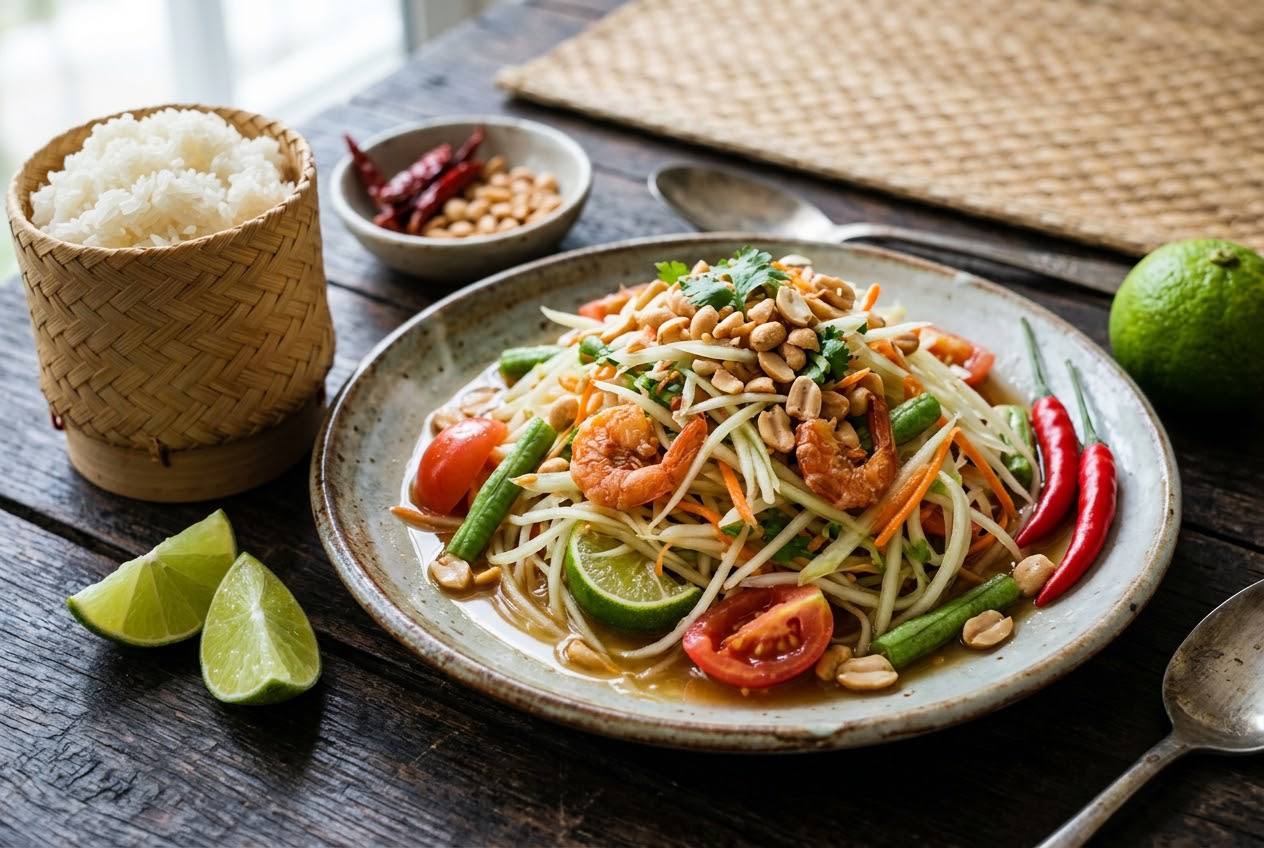
The green papaya salad done properly — mortar-pounded, four-flavour balanced, from a Michelin-recommended som tum chef. "Papaya salad" doesn't begin to cover it.
"Som tum" is a whole category, not one salad. The Michelin Guide Thailand divides it like this: tam thai — the classic, with roasted peanuts and dried shrimp; tam lao / tam pla ra — the Isaan version with fermented fish; tam pu — with salted field crab; tam pu pla ra — both crab and fish; tam korat — tam thai with pla ra added. This page is tam thai: the version without the funk.
The dish grew out of the Isaan word tam som — "pounding something sour." Isaan cooks have long pounded whatever sour fruit or vegetable was in season; papaya, a Central American import grown in Siam since before King Narai's reign, became the standard over time and spread across Thailand with Isaan migration. An early Thai cookbook from 1908 records a tamarind-based cousin called pu tam, but not som tam itself — the papaya version is younger than most people think.
This recipe comes from Chef Keng (เก่ง-จิรเดช เนตรวงค์) of Tum Kratoei Sagate (ตำกระเทยสาเกต) — a som tum institution that started in Sakat Nakhon, Roi Et province, and now runs 10 branches. His words on why tam thai endures: "Many people don't like the nua funk of som tum lao — that's why tam thai remains the timeless hit for people who don't eat pla ra."
| Thai | English | Amount |
|---|---|---|
| พริกจินดาแดงสด | Fresh red jinda chillies | 4 |
| กระเทียมไทย | Thai garlic cloves | 2 |
| ถั่วลิสงคั่ว | Roasted peanuts | 20 g |
| ถั่วฝักยาว | Long beans | 4–5 |
| มะเขือเทศสีดา | Sida tomatoes | 2 |
| น้ำตาลปี๊บ | Palm sugar | 1 tbsp |
| น้ำตาลทรายแดง | Brown sugar | ½ tbsp |
| น้ำปลา | Fish sauce | 2 tbsp |
| มะนาวฝาน | Lime segments | 4 |
| เส้นมะละกอ | Green papaya strips | 80 g |
| แครอทซอย | Julienned carrot | 10 g |
| กุ้งแห้งเนื้อ | Dried shrimp, meaty kind | 15 g |
Order matters. The chillies and garlic go in first because the pestle bruises them into the mortar's surface, releasing oils the dressing builds on. The papaya goes in last because it should bruise, not break.
Chillies: jinda (milder, fruitier — Michelin chef) vs bird's eye (hotter — Kapook and most street stalls).
Sugar: palm sugar + brown sugar for layered sweetness (Michelin) vs palm sugar alone (most home recipes).
Peanuts and shrimp: pounded into the dressing so it clouds and thickens (Chef Tuck's technique) vs kept as a topping (Michelin plating). Both are authentic.
Carrot: optional colour and crunch — purists skip it.
Papaya: hand-chopped with a knife vs grated. Pantip home cooks are firm: chopping is an art, and chopped papaya eats better than grated.
MSG: standard in street stalls; chef recipes skip it. Chef Tuck publishes an explicitly MSG-free technique.
This recipe is translated from the following Thai-language sources. Where they disagree, we've said so.
1. Michelin Guide Thailand (23 Feb 2026) — "เปิดสูตร (ไม่ลับ) วิธีทำส้มตำไทยสูตรคลาสสิกระดับร้านรางวัลมิชลิน" — recipe of Chef Keng, Tum Kratoei Sagate — guide.michelin.com
2. Michelin Guide Thailand (17 Feb 2022) — "ถอดรหัสความอร่อย: ส้มตำ" — som tum taxonomy, Baan Somtum & Somtum Der — guide.michelin.com
3. Kapook Cooking — "3 สูตรส้มตำไทย วิธีตำส้มตำอร่อยเด็ดแซ่บ" — cooking.kapook.com
4. Pantip thread 32531416 — "ถามคนที่ตำสัมตำอร่อยๆ" (home cooks: three flavours, chopping technique) — pantip.com
5. Chef Tuck (FOOD SCIENCE by CHEF TUCK) — "เทคนิคส้มตำไทย" (MSG-free technique; cloudy dressing = ground peanuts & shrimp) — facebook.com