Recipe · Thailand · Roast

Ped Op Nam Pueng (Honey Roast Duck)

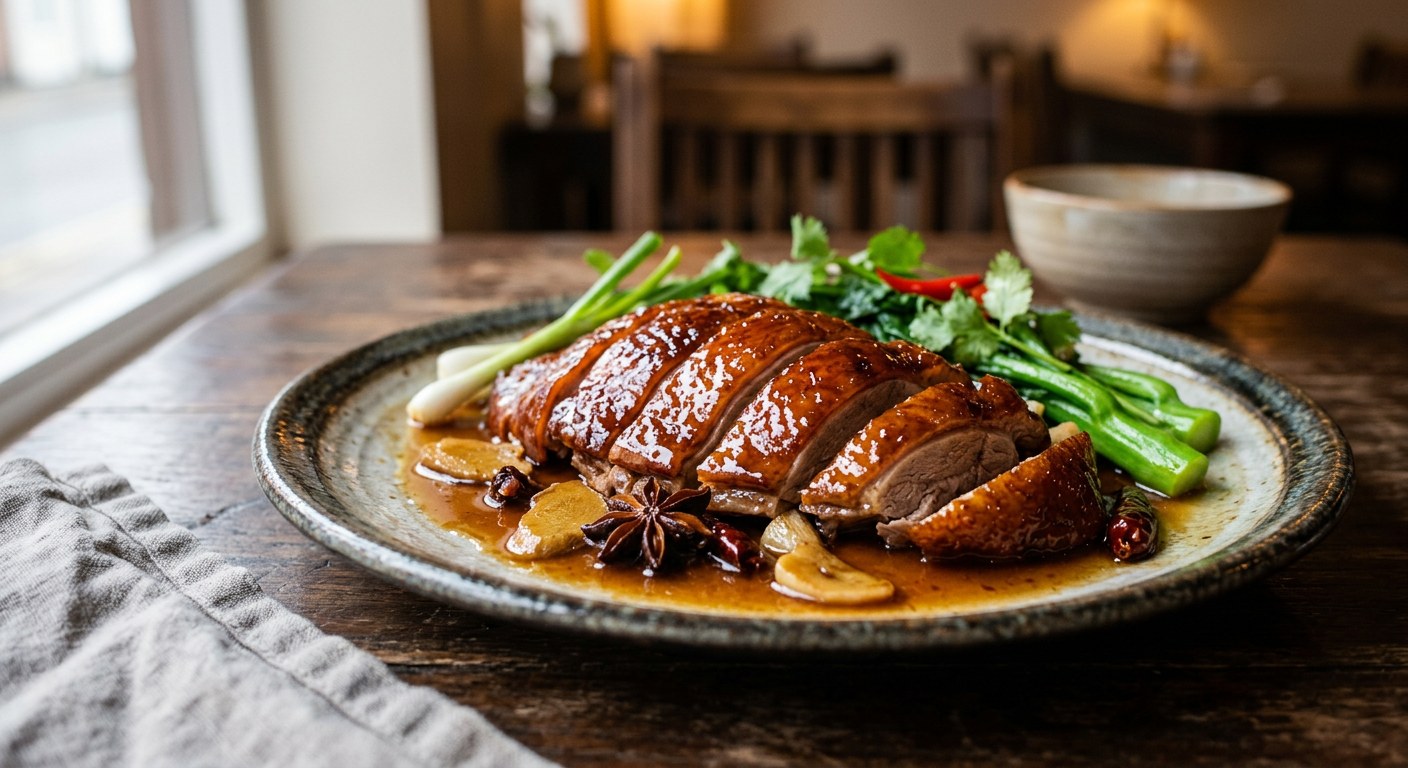
Honey roast duck — a whole duck marinated overnight in honey, ginger and star anise, then slow-roasted low and fast-finished high for crispy skin and tender, sweet-savoury meat.

Ped Op Nam Pueng (Honey Roast Duck)

เป็ดอบน้ำผึ้ง

Ped op nam pueng sits in the sweet-savoury corner of Thai-Chinese cooking — a whole duck steeped overnight in honey, soy, ginger and star anise, then roasted slowly until the fat melts away and the skin turns to lacquer. It appears on Thai menus as a special, often in the section next to the Peking duck it resembles.

The difference from Peking duck is the marinade: honey replaces the maltose glaze, and the duck is steeped in the seasoning rather than brushed with it, so the sweetness runs all the way through the meat. The result is less shatter-crisp and more deeply caramelised — closer to a Cantonese siu mei roast.
The Recipe (serves 4 · ~1 days (mostly resting))

For the marinade

ThaiEnglishAmount
เป็ดWhole duck1 (about 2kg)
น้ำผึ้งHoney1.5 cups
ซีอิ๊วขาวLight soy sauce1.5 cups
ขิงGinger6 slices
สามเกลอGarlic, pounded together3 tbsp
โป๊ยกั๊กStar anise4 flowers
ผงอบเชยCinnamon powder2 tsp
ผงพะโล้Five-spice powder1 tsp
น้ำมันหอยOyster sauce2 tbsp
พริกไทยBlack pepper2 tsp
น้ำสุกBoiled water, as needed2 cups

The Method

  1. Marinate overnight. Wash the duck and let it air-dry. Mix all the marinade ingredients, spoon a quarter inside the cavity, and sew or skewer it closed. Sit the duck in the remaining marinade and refrigerate for at least 24 hours, turning it a few times.
  2. Dry. Lift the duck out, keep the marinade for the sauce, and hang or prop the duck so the skin dries for an hour or two.
  3. Roast low, then high. Roast at 110°C for about 1.5 hours to render the fat under the skin. Raise the oven to 150–160°C and roast another 30–45 minutes until the skin is bronzed and crisp.
  4. Sauce and serve. While the duck roasts, boil the reserved marinade with the juices, adjusting with soy or sugar, until it makes a rich glaze. Rest the duck briefly, then chop and serve with the sauce over rice, or sliced as a main with greens.

Low and slow, then hot

The recipe's two-stage roast does two jobs. The low stage (110°C) melts the fat under the skin and gently cooks the meat; the hot finish (150–160°C) crisps and colours the skin. Swap the order and you get either greasy skin or dry meat.

The overnight rule

Twenty-four hours in the marinade is the minimum the recipe asks for, and it is not padding. Honey and soy need that long to carry flavour past the skin into the breast. The marinade then becomes the sauce — boiled, reduced, and poured over the carved duck.

Serving

Cook's Tips

Variations

Sources

This recipe is translated from the following Thai-language sources. Where they disagree, we've said so.

1. Cookpad — ped yang op nam pueng by PongKitchen — https://cookpad.com/th/recipes/13506186

2. Pantip — ped op nam pueng with orange sauce — https://pantip.com/topic/40605364/desktop

Johnny Tiger
Johnny researches and translates Thai recipes from Thai-language sources — chefs, restaurants and home cooks in Thailand — and publishes them with their sources cited. No westernised shortcuts, no invented steps.