Recipe · Thailand · The Stir-Fry Named for Its Ginger

Pad Prik King (ผัดพริกขิง)

พริก means chilli, ขิง means ginger — the name says both, and the paste contains both. Crispy pork belly, long beans and hair-thin kaffir lime in a two-minute wok.

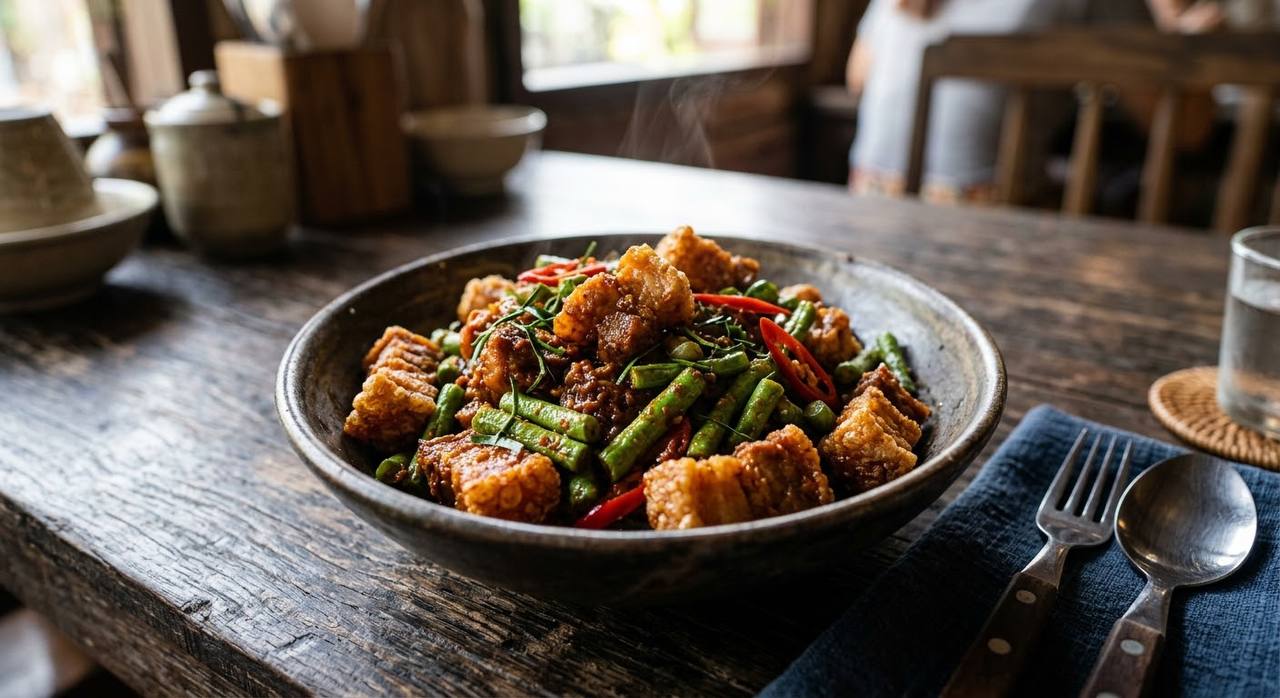
Pad prik king (ผัดพริกขิง) crispy pork belly in chilli-ginger paste with long beans and kaffir lime

The Stir-Fry Named for Its Ginger

Most Thai dish names tell you what's in them. This one names the paste: พริกขิง — chilli-ginger. Dried chillies carry the heat and the colour; the ginger carries the scent, sharp and clean against the galangal's resin. It is the one paste where ginger isn't a substitution — it's the dish's whole identity.

And it was built for หมูกรอบ — crispy pork belly. The paste fries in oil until it darkens, the long beans go in for crunch, and the pork goes in last, a quick toss only, so the crackling survives the wok. That contrast — crisp fat, bright ginger, hot chilli — is what made the dish a noodle-shop and rice-shop staple.

Modern Thai cooks have a favourite variation: crumble a salted egg through it at the end. The yolk's salt-creaminess against the chilli-ginger paste is the current restaurant move, and Phol's version below documents it. The classic doesn't need it — but it isn't wrong either.
The Recipe (serves 3)

ThaiEnglishAmount
The paste (พริกขิง)
พริกแห้งDried chillies10
กระเทียมGarlic1 head
ข่าGalangal, sliced6 slices
หอมแดงShallots6
ตะไคร้Lemongrass, sliced1 stalk
รากผักชีCoriander roots3
พริกไทยเม็ดPeppercorns6
ขิงGinger, sliced — the dish's namesake6 slices
เกลือป่นSalt1 tsp
The stir-fry
หมูกรอบCrispy pork belly300 g
ถั่วฝักยาวLong beans, cut into lengths100 g
น้ำตาลปี๊บPalm sugar1 tbsp
น้ำปลาFish sauce1 tbsp
ใบมะกรูด (ซอยฝอย)Kaffir lime leaves, sliced hair-thin5
พริกแดงRed chilli, sliced1
น้ำมันพืชVegetable oil2 tbsp

The Salted-Egg Version (หมูกรอบผัดพริกขิงไข่เค็ม — from Phol)

The restaurant version: 30 g red curry paste fried in oil, loosened with 2 tbsp water, seasoned with 2 tsp fish sauce and 2 tsp palm sugar, then 100 g long beans, 100 g crispy pork, 4 sliced kaffir lime leaves and a yellow chilli. At the very end, one salted egg, crumbled through and tossed once — the yolk breaks into the paste and the whole dish turns creamy-salty.

Note what changes: the shop shortcut swaps the pounded chilli-ginger paste for plain red curry paste. Faster, but the ginger — the name of the dish — goes missing. The salted egg brings its own argument to the plate.

The Method

  1. Pound the paste. Chillies, garlic, galangal, shallots, lemongrass, coriander roots, peppercorns, ginger and salt — pounded fine. The ginger is the point.
  2. Fry it. Medium-high heat, oil in, paste in — fry until it darkens and smells cooked through.
  3. Beans. Long beans in, stir-fried briefly — they should still snap.
  4. Pork last. The crispy pork belly goes in last and gets a quick toss only. The crackling must survive.
  5. Season. Palm sugar and fish sauce, tossed to coat.
  6. Finish. Off the heat: hair-thin kaffir lime and sliced red chilli folded through. Serve immediately with rice — the pork will not wait for you.

Where Thai Sources Disagree

The paste. The from-scratch chilli-ginger paste (Wongnai's) against plain red curry paste (Phol's shop-style version). The first honours the name; the second is the restaurant shortcut.

Ginger and galangal together. The Wongnai paste carries both — ginger for the sharp clean note, galangal for the resin. Recipes that drop the ginger are cooking a different dish.

The salted egg. Phol's version crumbles one in at the end; the classic omits it entirely. Both are published as ผัดพริกขิง — the egg is a modern addition, not a rule.

The pork. Crispy pork belly is the standard, but the dish also appears with lean pork and with prawns. The crackling version is the one worth making.

Sweetness. Palm sugar against plain sugar — the palm sugar's caramel note matters against the ginger's sharpness.

How Western Versions Get It Wrong

UK Ingredient Notes

Sources

This recipe is translated from the following Thai-language sources. Where they disagree, we've said so.

1. Wongnai (gam.sali) — "วิธีทำ หมูกรอบผัดพริกขิง สูตรพริกแกงตำเอง" (23 Feb 2018 — the from-scratch chilli-ginger paste and full quantities) — wongnai.com

2. Phol Food Mafia — "Stir-Fried Pork Belly Crisp with Red Curry and Salted Egg (หมูกรอบผัดพริกขิงไข่เค็ม)" (the salted-egg variation) — pholfoodmafia.com

Johnny Tiger
Johnny researches and translates Thai recipes from Thai-language sources — chefs, restaurants and home cooks in Thailand — and publishes them with their sources cited. No westernised shortcuts, no invented steps.