Recipe · Thailand · The Stir-Fry That Lives On Leftover Curry Paste

Pad Prik Gaeng Moo Krob (ผัดพริกแกงหมูกรอบ)

Crispy pork belly stir-fried with red curry paste, long beans and kaffir lime leaves — all the flavour of a red curry, none of the broth.

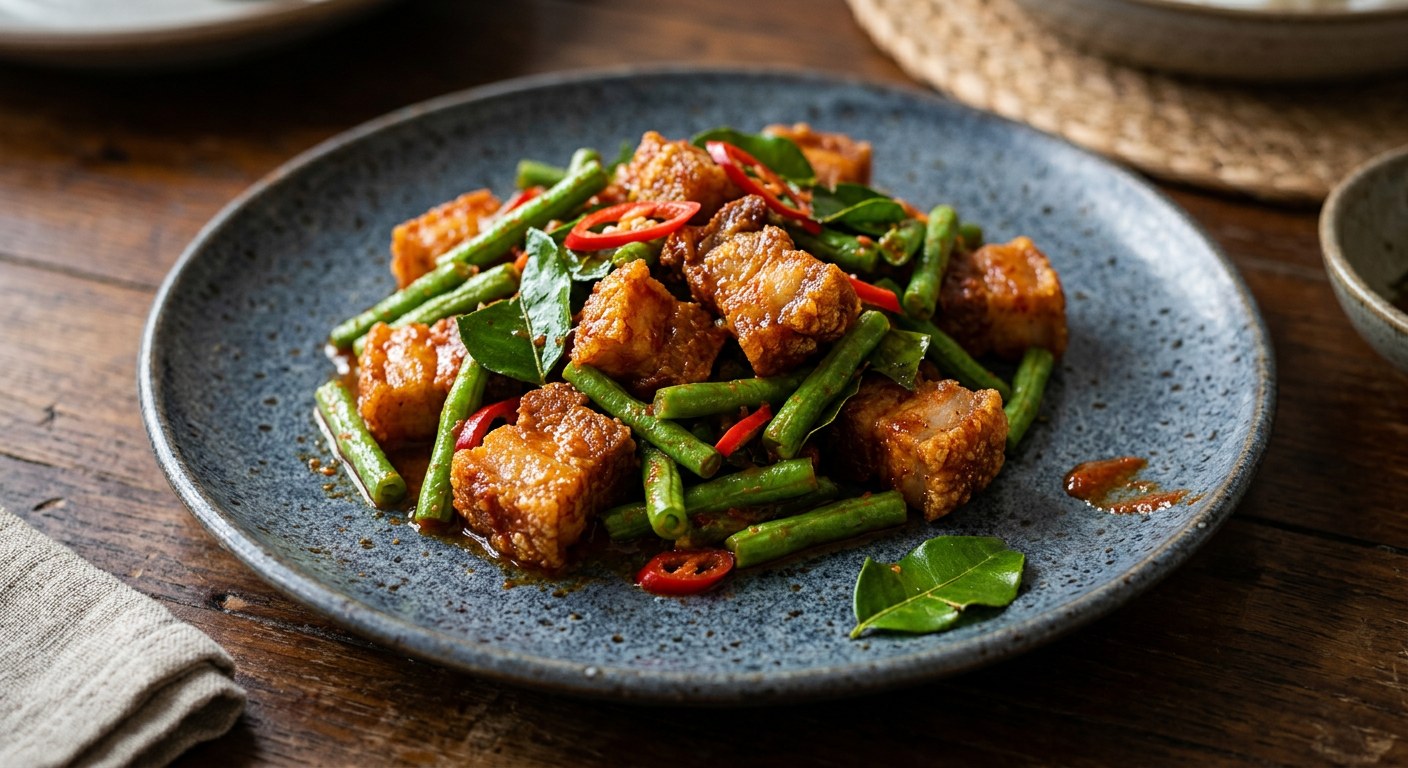
Pad prik gaeng moo krob — golden crispy pork belly cubes stir-fried with red curry paste, long green beans and kaffir lime leaves on a ceramic plate

The fifteen-minute answer to leftover curry paste

In Thailand, pad prik gaeng is what happens to the half-jar of red curry paste sitting in the fridge after a big gaeng phet. Instead of simmering it into a soup, you fry the paste in hot oil until it smells toasted, then toss meat and vegetables through it. The result is a dry, clingy, chilli-oil sheen on every piece — all the flavour of a red curry with none of the broth.

With crispy pork belly (moo krob) it becomes a favourite from khao gaeng counters and rice-shop menus: the crackling adds crunch against the soft, glossy beans. A Pantip thread on the dish shows just how seriously Thai cooks take it — one poster spent years visiting every street stall near his home trying to find a pad prik gaeng moo as good as the one his local chef made before closing shop.

The Recipe For 2–3 servings; about 15 minutes. Moo krob (crispy pork belly) is sold ready-made by Chinese barbecue stalls and Thai butchers; roast pork belly with crackling is the closest UK substitute.

ThaiEnglishAmount
หมูกรอบCrispy pork belly (moo krob), cut bite-size1 cup / ~100 g
พริกแกงเผ็ดRed curry paste (prik gaeng phet)1–2 tbsp (heat to taste)
ถั่วฝักยาวLong beans, cut into 5 cm lengths1 cup
ใบมะกรูดKaffir lime leaves, very finely sliced5–10 leaves
ใบโหระพาHoly basil leaves1 handful (optional)
น้ำปลาFish sauce1–1½ tbsp
น้ำตาลปี๊บ / น้ำตาลPalm sugar or white sugar1–2 tsp
น้ำมันหอยOyster sauce1–2 tbsp (optional; see notes)
น้ำซุปไก่ / น้ำเปล่าChicken stock or water¼–½ cup
พริกชี้ฟ้าแดงRed spur chilli, sliced long (garnish)to taste
น้ำมันพืชVegetable oil1–2 tbsp

Works with any protein: sliced pork, minced pork, chicken, prawns or squid all appear across the sources. Swap long beans for green beans or asparagus. For khao pad prik gaeng (the fried-rice version Thai Aroy Dee serves "with rice"), fold cooked jasmine rice through the finished stir-fry and fry for two minutes more.

The Method

  1. Prep first, because the wok is fast. Have the pork cut, beans cut, leaves sliced and sauces measured before the pan goes on — the whole dish takes 5–7 minutes once the heat is on.
  2. Fry the curry paste. Heat the oil in a wok over medium heat, add the curry paste and stir until it smells toasted and the oil turns red, about a minute. Most sources fry the paste first; one adds the pork first, then the paste.
  3. Add the crispy pork. Stir to coat every piece in the paste, 30–60 seconds. Keep the heat moderate so the crackling doesn't burn.
  4. Add the long beans and a splash of liquid. Stir-fry for a minute, add the stock or water, and let it bubble down. Kapook uses chicken stock; most home cooks just use water.
  5. Season. Fish sauce and sugar, plus oyster sauce if you want the glossier Chinese-influenced version. The paste is already salty, so season lightly at first and taste.
  6. Finish with the aromatics. Stir in the kaffir lime leaves and holy basil, turn off the heat, and serve immediately over jasmine rice. The leaves go in last — frying them long turns them bitter.

Where Thai Sources Disagree

Paste first or pork first? Most sources (Wongnai, Kapook, Cookpad) fry the curry paste in oil before anything else; TrueID's southern-style recipe stir-fries the pork first, then adds the paste. Both work — the difference is whether the pork browns in plain oil or poaches in paste.

Central or southern curry paste? The dish is normally made with central-Thai red curry paste (prik gaeng phet), but TrueID specifically uses southern-style paste (prik gaeng tai), which is hotter and sharper with extra turmeric. A Pantip thread on the dish openly debates which one the 'best' street stall uses.

Oyster sauce or not? Kapook's version adds 2 tbsp oyster sauce for gloss and sweetness; Cookpad's Kik uses thin soy sauce, seasoning sauce and MSG instead; Wongnai's two recipes season with only fish sauce and sugar. The dish sits on the Thai–Chinese border, and each cook pushes it one way.

Holy basil: in or out? Kapook says it's optional; Cookpad and others add a handful at the end. The curry paste already carries the herb flavour, so UK restaurants often skip it.

Liquid and consistency. Wongnai's recipes add just enough water to cook the beans and let it reduce; Kapook adds half a cup of stock for a saucier finish that pools slightly on rice.
How Western Versions Get It Wrong

UK Ingredient Notes

Sources

This recipe is translated from the following Thai-language sources. Where they disagree, we've said so.

Johnny Tiger
Johnny researches and translates Thai recipes from Thai-language sources — chefs, restaurants and home cooks in Thailand — and publishes them with their sources cited. No westernised shortcuts, no invented steps.