Recipe · Thailand · The Stir-Fry That Lives On Garlic

Pad Kratiem Prik Thai (ผัดกระเทียมพริกไทย)

Pork fried hot with an outrageous amount of garlic and pounded peppercorns, finished with a light oyster glaze — the dish Thai menus translate as 'garlic and pepper'.

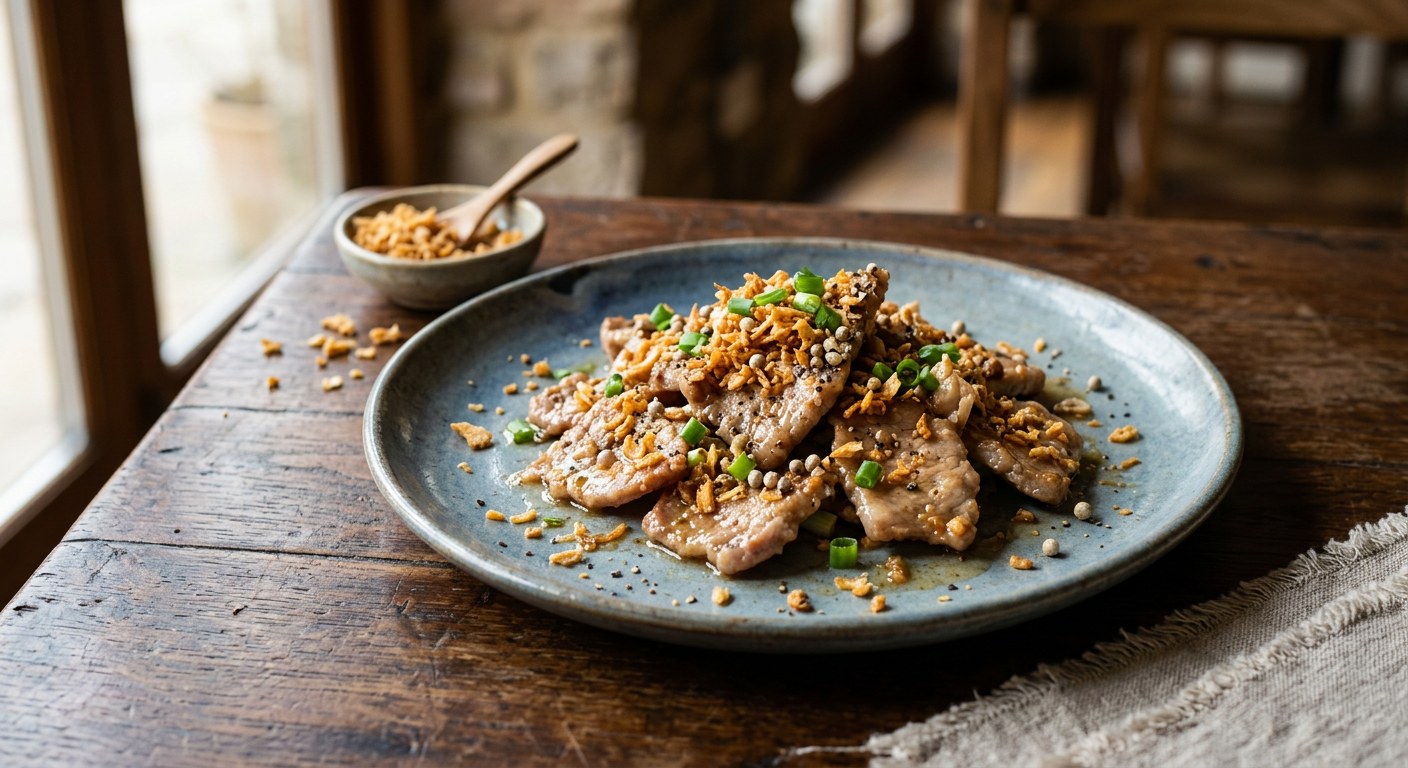
Pad kratiem prik thai — stir-fried pork coated in golden fried garlic and cracked pepper with spring onion, on a ceramic plate

The quietest dish on the menu, and the one Thai cooks order

Pad kratiem prik thai has no chilli heat, no coconut milk, no herbs — just garlic and pepper, used with a confidence that seems almost rude. It is the dish Thai cooks themselves order at rice shops when they want to taste the kitchen's basic technique: there is nowhere to hide. On UK menus it appears as "pad gra-tiem prig thai", and it is the answer every Thai parent gives to a child who will not eat spicy food.

The name is precise: kratiem is garlic, prik thai is pepper — white pepper in most versions, but the best home recipes insist on whole black peppercorns pounded at the last minute, because pre-ground powder has already lost the volatile oils. The recipe below is the dry, garlic-forward version; a famous Kapook "ancient recipe" variant swaps in crisp-fried garlic, and the prawn version adds coriander root. All three are covered.

The Recipe For 2–3 servings; about 15 minutes. Pork is standard, but prawns, squid and chicken all appear in the sources. Do not fear the garlic quantities.

ThaiEnglishAmount
หมูสามชั้น / สันนอกPork belly or collar, sliced bite-size (or prawns/chicken)300–400 g
กระเทียมGarlic, finely pounded or minced2 tbsp (go heavy)
พริกไทยดำWhole black peppercorns (or white pepper), pounded rough1–2 tsp
รากผักชีCoriander root, pounded (prawn version)1 tsp
น้ำมันพืชVegetable oil2 tbsp
ซีอิ๊วขาวLight soy sauce1 tbsp
น้ำปลาFish sauce½ tbsp
ซอสหอยนางรมOyster sauce (saucy variant)1–2 tbsp
น้ำตาลทรายSugar½ tsp
เกลือSalta pinch
ผักชีCoriander leaves, to finisha few sprigs

Three versions across the sources: (1) dry home version — garlic and peppercorns pounded together, fried, then the pork, seasoned with only soy, fish sauce and a pinch of salt (Wongnai); (2) the "ancient recipe" — garlic pounded fine and fried crisp in the oil first, removed, then returned to the finished pork with an oyster-sauce glaze (Kapook boran); (3) prawn version — coriander root pounded with the garlic and pepper, prawn heads' tomalley fried in, served over rice with crisp fried garlic and pork crackling on top (Kapook roundup).

The Method

  1. Pound the aromatics. Garlic and whole black peppercorns, pounded together in a mortar until rough. Wongnai's recipe is specific about this: whole peppercorns pounded at the last minute smell completely different from pre-ground pepper, which has already lost its oils. Coriander root goes in with them if you are making the prawn version.
  2. Fry the crisp garlic (variant). The Kapook "ancient recipe" fries finely pounded garlic in plenty of oil with a pinch of salt until golden — the salt keeps it crisp — then lifts it out and drains it. This fried garlic goes back over the finished dish.
  3. Fry the paste gently. Medium heat, not high — Wongnai warns the garlic-pepper paste burns before the pork cooks if the flame is too strong. Stop when it smells sharp and sweet.
  4. Add the pork. Raise the heat and stir-fry until just cooked. Overcooking dries the pork out; the dish should be moist, not jerky.
  5. Season. Light soy, fish sauce, and only a pinch of salt. The saucy versions add oyster sauce and half a teaspoon of sugar here and toss until the sauce coats every piece.
  6. Return the garlic and finish. Toss the crisp fried garlic through at the very end so it stays crunchy, scatter coriander leaves over, and serve with jasmine rice and sliced cucumber.

Where Thai Sources Disagree

White pepper or black peppercorns? UK menus translate prik thai as white pepper, and most restaurants use the powder. But Wongnai's recipe is explicit that the dish wants whole black peppercorns pounded rough — the pre-ground stuff "doesn't smell the same". The Kapook recipes split the difference and use pounded pepper for the paste plus a sprinkle of powder at the end.

Garlic: in the paste, or fried crisp? The classic method pounds garlic into the paste and fries it with the meat. The Kapook "ancient recipe" does something different: the garlic is fried crisp in the oil first, removed, and only returned as a crunchy topping — the pork cooks in garlic-infused oil. The best versions do both.

Coriander root: yes or no? The prawn version (Kapook roundup, from a Pantip member) pounds coriander root in with the garlic and pepper; the pork recipes skip it. It is the difference between a seafood flavour base and a plain one.

Oyster sauce: how much? The dry home version uses none — just soy, fish sauce and salt. The boran version glazes with oyster sauce, sugar and a drop of dark sweet soy for colour. UK restaurants almost always make the glazed version.

Pork cut. Wongnai uses belly or collar with some fat — lean cuts dry out. Kapook's boran version just says "pork, sliced". The prawn version is a different dish wearing the same name.
How Western Versions Get It Wrong

UK Ingredient Notes

Sources

This recipe is translated from the following Thai-language sources. Where they disagree, we've said so.

Johnny Tiger
Johnny researches and translates Thai recipes from Thai-language sources — chefs, restaurants and home cooks in Thailand — and publishes them with their sources cited. No westernised shortcuts, no invented steps.