Recipe · Thailand · The Rice-Shop Staple
Pad Khing (ผัดขิง)
Chicken through a hot wok with pounded garlic and a half-cup of ginger — the fragrant, warming stir-fry every rice shop knows.
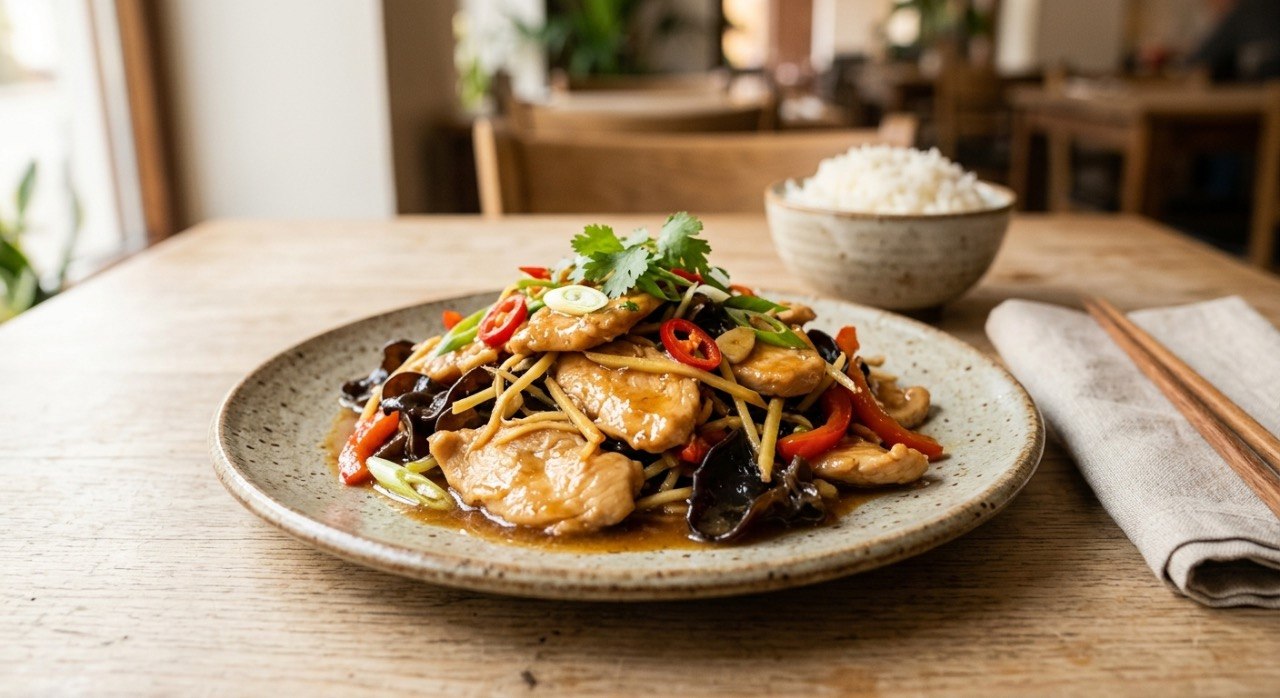
Chicken through a hot wok with pounded garlic and a half-cup of ginger — the fragrant, warming stir-fry every rice shop knows.
ผัดขิง is the dish where ginger is the main ingredient, not a seasoning. The Wongnai recipe runs a full half-cup of sliced ginger to 500 grams of chicken — pounded garlic and ginger go into the hot oil first, fried until the wok smells of both, and only then does the chicken join. That order is the whole technique: the ginger infuses the oil before anything else lands.
The Kapook version frames the dish as the health order — "a menu with Thai herbs and protein, plus vegetables — hot and peppery, but genuinely good for you" — and allows either young or mature ginger, the young kind softer and milder. The supporting cast is fixed across both sources: black wood-ear mushrooms for their crunch, sliced onion, and a finish of spring onion and red spur chilli.
Where they part is the sauce. Wongnai glosses the chicken with tao jiao, the fermented soybean paste, white soy and a spoon of sugar; Kapook dresses it with oyster sauce and fish sauce instead. Same dish, two shops — the tao jiao version is the deeper, funkier one.
| Thai | English | Amount |
|---|---|---|
| สะโพกไก่ | Chicken thigh | 500 g |
| น้ำมันพืช | Vegetable oil | 3 tbsp |
| กระเทียม | Garlic, pounded | 2 tbsp |
| ขิงซอย | Ginger, sliced thin | ½ cup |
| หอมใหญ่ | Onion, sliced | ½ |
| เห็ดหูหนู | Black wood-ear mushrooms | ½ cup |
| เต้าเจี้ยว | Tao jiao (fermented soybean paste) | 3 tbsp |
| น้ำตาลทราย | Sugar | 1 tbsp |
| ซีอิ๊วขาว | White soy sauce | 2 tbsp |
| พริกชี้ฟ้าแดง | Red spur chilli, sliced | ¼ cup |
| ต้นหอม | Spring onion, cut | ¼ cup |
The Kapook version swaps the tao jiao for oyster sauce and fish sauce, and allows chicken breast in place of thigh. Young ginger if you want it milder. Phol Food Mafia's scale: 400 g thigh, 160 g ginger, marinated 10 minutes — the ginger-to-meat ratio is the point.
The sauce. Wongnai's tao jiao, white soy and sugar versus Kapook's oyster sauce and fish sauce. Phol Food Mafia adds a third: tao jiao plus white soy and seasoning sauce. Pim blends black tao jiao with oyster sauce. The tao jiao versions are funkier and darker; the oyster-sauce ones rounder.
To marinate or not. Phol marinates the chicken in seasoning sauce and white soy for 10 minutes before the wok; Wongnai and Pim go straight in. The marinade deepens the seasoning on the meat.
Young or mature ginger. Kapook allows both — young ginger is softer and less fiery; Pim and Phol specify mature ginger, sliced generously (150–160 g, the dish's real main ingredient). The shops slice mature.
Breast or thigh. Kapook and Pim permit chicken breast; Wongnai and Phol specify thigh. Pim swaps the protein outright on repeat days — pork liver is her variant. Thigh stays juiciest in a fast wok.
Wood-ear or not. All five recipes include the black wood-ear — it's the dish's crunch. The sources agree on everything except how much.
This recipe is translated from the following Thai-language sources. Where they disagree, we've said so.
1. Phol Food Mafia (สูตรโดย พล ตัณฑเสถียร) — "Stir-fried Chicken with Ginger (ไก่ผัดขิง)": thigh 400 g, 160 g ginger, tao jiao base, 10-minute marinade — pholfoodmafia.com
2. ครัวบ้านพิม (Pim, 2009, 384k views) — "ไก่ผัดขิงกับเห็ดหูหนู" (mature ginger 150 g, black tao jiao + oyster sauce blend) — pim.in.th
3. Aroifin — "วิธีทำ ไก่ผัดขิง อร่อย ทำตามไม่ยาก ได้ประโยชน์จากขิงเต็ม ๆ" (May 2025, serves 3–4) — aroifin.com
4. Wongnai — "วิธีทำ ไก่ผัดขิง เมนูผัดเสริมคุณค่าด้านโภชนาการ กินง่ายกินได้ทุกวัย" (the recipe used here) — wongnai.com
5. Kapook — "ไก่ผัดขิง เมนูสุขภาพรสเผ็ดร้อนอิ่มโปรตีน" (the oyster-sauce version, young or mature ginger) — cooking.kapook.com