Recipe · Thailand · The Fence-Line Flower
Nam Dok Anchan (น้ำดอกอัญชัน)
Butterfly pea flowers boiled until the water runs deep blue, sweetened, iced — and turned purple the moment lime goes in.
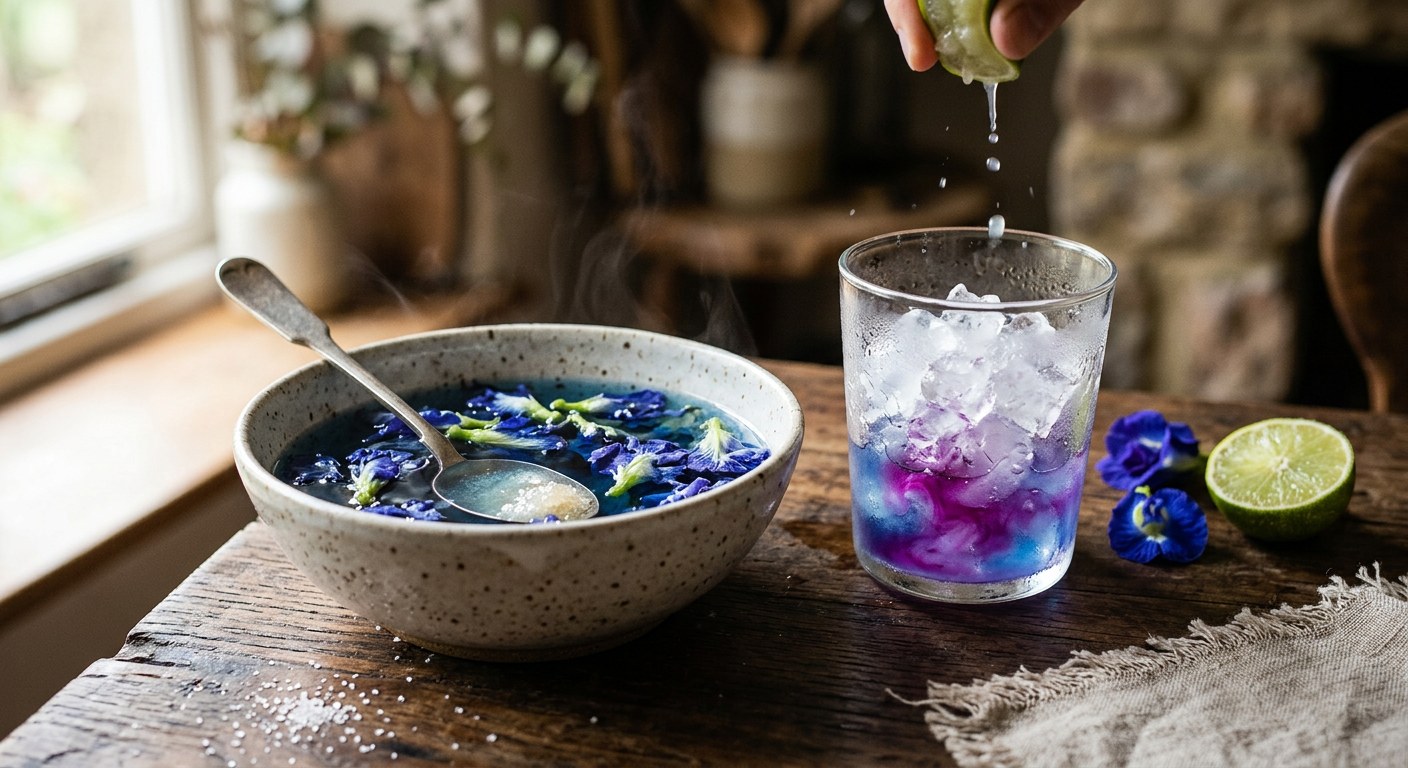
Butterfly pea flowers boiled until the water runs deep blue, sweetened, iced — and turned purple the moment lime goes in.
ดอกอัญชัน is the blue flower every Thai fence grows and nobody plants on purpose — which is exactly Kapook's pitch: people think of it as the eyebrow dye grandmothers used, but break off a handful and it becomes the day's prettiest drink in fifteen minutes. The recipe is barely a recipe: boil, sweeten, strain, ice.
Then there is the trick the drink is famous for. Wongnai's home recipe notes it matter-of-factly: the moment lime juice goes in, the blue water turns purple — the same glass of anchan, two colours, no dye. It is chemistry, not decoration, and every Thai source treats the lime squeeze as part of the drink, not an optional garnish.
Beyond the home glass sit two other schools. TrueID's concentrate is made for colouring desserts, and it is strict about it: the stems and pistils come off every flower because they make the water bitter, petals only, boiling water poured over and left to steep. And Nestlé Professional builds the café version backwards — lime and sugar syrup in the glass first, the blue anchan water poured in last so it floats over the acid layer, served immediately while cold.
| Thai | English | Amount |
|---|---|---|
| ดอกอัญชันสด | Butterfly pea flowers, fresh | a generous handful |
| น้ำ | Water | 2 cups |
| น้ำตาลทราย | Sugar | 1/2 cup (or to taste) |
| น้ำแข็ง | Ice | 1 glass |
The lime version (Wongnai): 30 dried flowers, 2 L water, 5 limes, 2 tbsp sugar — the lime goes in at the end and the drink turns purple. The café batch (Coffman): 50 g fresh or dried flowers, 1 L water, 150 g sugar, 20 g lime powder, 1/2 tsp salt — boiled until the petals turn pale. The concentrate (TrueID): 60 g flowers to 100 g water, petals only, steeped 5–10 minutes — for colouring desserts, not drinking.
Boil or steep. Kapook boils 2–3 minutes, Wongnai 5, Coffman until the petals turn pale. TrueID doesn't boil at all — boiling water poured over the petals, steeped 5–10 minutes off the heat. Longer and hotter means deeper colour, and more bitterness if the flowers break down.
Fresh or dried. Kapook's fence version uses fresh flowers; Wongnai counts 30 dried ones; Coffman accepts either, 50 g. Dried flowers colour harder per gram — the selling recipes prefer them.
Lime or not. Wongnai squeezes fresh limes in and watches the purple turn; Coffman batches it with lime powder and half a teaspoon of salt; Nestlé layers the blue over the lime so the glass shows both colours. Kapook and TrueID serve it plain. The pure version is the base; the lime version is the showpiece.
The sugar scale. Kapook's half cup for two cups of water is a syrup; Coffman runs 150 g per litre; Wongnai's 2 tablespoons over two litres is barely sweetened. Every recipe says "to taste" — the disagreement is where each starts.
The bitter parts. TrueID insists stems and pistils come off, because they taste bitter. The other sources wash the flowers whole and never mention it — a detail only the colouring school cares about.
Salt. Only Coffman adds it — half a teaspoon, the batch-brew trick that rounds the sweetness. The home glass skips it.
This recipe is translated from the following Thai-language sources. Where they disagree, we've said so.
1. Kapook — "น้ำอัญชัน เครื่องดื่มสมุนไพรหวานชื่นใจจากดอกไม้ริมรั้ว" (the recipe used here) — cooking.kapook.com
2. Wongnai — "น้ำอัญชันมะนาว สดชื่นๆ" by OPORRY (the lime turn) — wongnai.com
3. Coffman — "เครื่องดื่ม อัญชันมะนาว" (the café batch with lime powder and salt) — coffmanshop.com
4. TrueID — "วิธีทำ น้ำสีอัญชัน แบบเข้มข้น สำหรับแต่งสีขนม" (the petal-only concentrate) — food.trueid.net
5. Nestlé Professional — "สูตรน้ำอัญชันมะนาว" (the layered café glass) — nestleprofessional.co.th