Recipe · Thailand · The World's #1

Massaman (แกงมัสมั่น)

The curry CNN ranked the world's best food. Nutmeg, mace, cardamom, cinnamon and cloves pounded into a paste, coconut cream cracked, potatoes and tamarind. Not peanut sauce — ever.

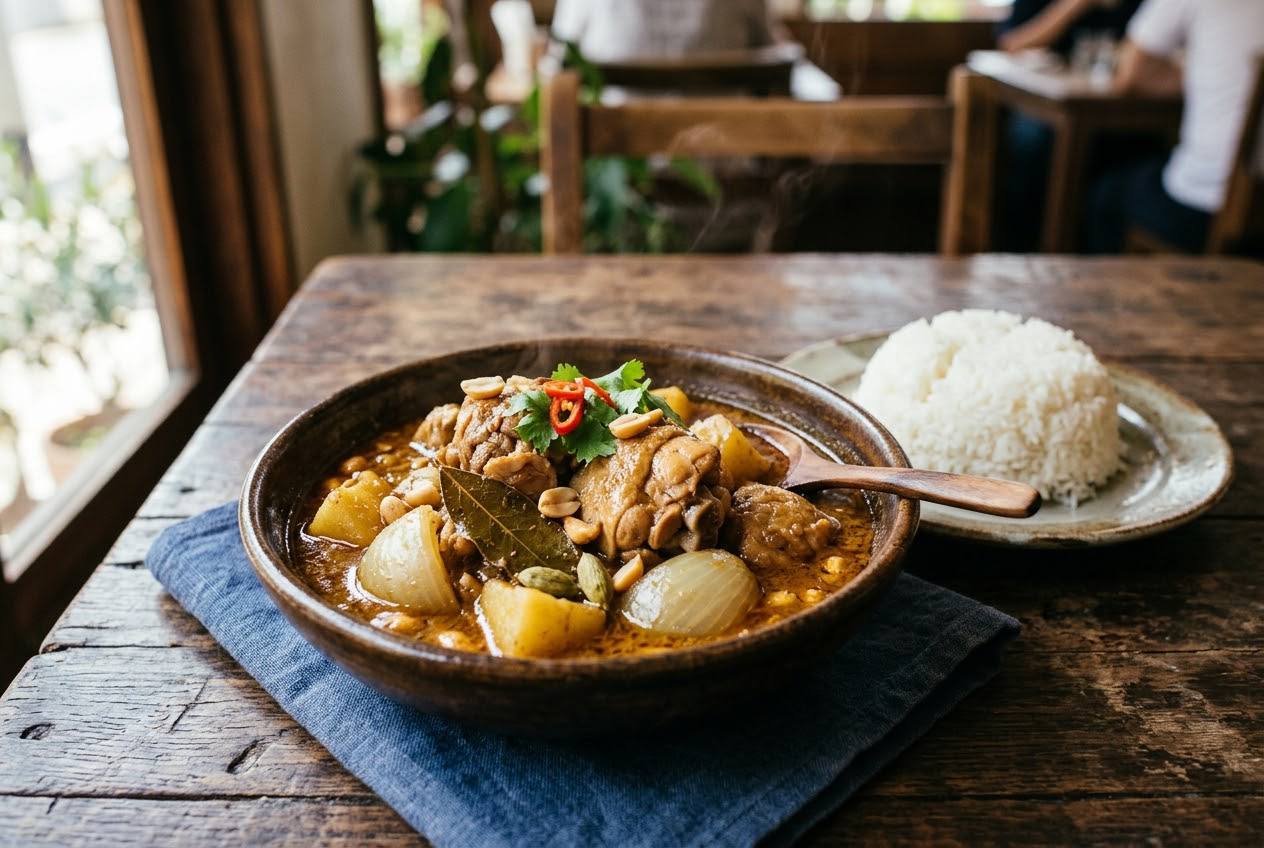
Massaman curry (แกงมัสมั่น) with braised chicken, potatoes, onions, cardamom and roasted peanuts

The Curry Kings Wrote About

Massaman is Thai cuisine's Persian thread. The name comes from "Muslim" — the dish entered Siam through Persian and Indian traders and was refined in the royal kitchens. Its oldest endorsement is literary: King Rama II's nineteenth-century food poem sings of "massaman, a curry of my beloved" — fragrant with cumin, fierce in heat. Two centuries later, CNN Travel ranked it the #1 food in the world (2021), and in 2022 Chef Chumpol Jangprai of R-HAAN (2 Michelin stars) served his massaman to the 21 world leaders of the APEC summit gala.

The dish's identity is its spice arsenal — nutmeg, mace, cardamom, cinnamon, cloves, cumin and coriander seed, dry-roasted and pounded with the chillies and aromatics. Western versions flatten this into "mild red curry with peanut butter." That is not this dish.

The Paste (from scratch — makes the batch below)

ThaiEnglishAmount
พริกชี้ฟ้าแดงแห้ง (แกะเม็ด)Dried red spur chillies, deseeded5–6
พริกขี้หนูแดงแห้ง (แกะเม็ด)Dried red bird's eye chillies, deseeded9–10
กระเทียมไทยThai garlic2 tbsp
หอมแดงShallots2 tbsp
ตะไคร้Lemongrass2 tbsp
ข่าGalangal1 tbsp
ผิวมะกรูดMakrut lime zest1 tsp
กะปิShrimp paste⅓ tbsp
ลูกผักชี (คั่ว)Coriander seeds, dry-roasted1 tbsp
ยี่หร่า (คั่ว)Cumin, dry-roasted½ tbsp
ลูกจันทร์Nutmeg1
ลูกกระวาน (แกะเปลือก)Cardamom pods, shelled5
ดอกจันทร์Mace flower1
อบเชย (คั่ว)Cinnamon sticks, dry-roasted2
กานพลูCloves2
เกลือSalt1 tsp

The curry — แกง (chicken; halve everything for 4–5 servings)

ThaiEnglishAmount
สะโพก/น่องไก่Chicken thighs and drumsticks1 kg
มันฝรั่งPotatoes, peeled and cut600 g
หอมใหญ่Onions, quartered300 g
หัวกะทิCoconut cream600 g
หางกะทิCoconut milk600 g
ลูกกระวานCardamom pods10 g
ใบกระวานBay leaves2 g
ถั่วลิสงคั่วRoasted peanuts50 g
น้ำมะขามเปียกTamarind water4 tbsp
น้ำตาลปี๊บPalm sugar5 tbsp
น้ำปลาFish sauce6 tbsp

The Method

  1. Fry the aromatics. Lemongrass, shallots, galangal, garlic in a little oil until golden; the deseeded dried chillies fried crisp. The paste's depth starts here.
  2. Roast the spices. Nutmeg, mace, cardamom, coriander seeds, cumin, cinnamon, cloves — dry pan until fragrant. This is the identity of the dish; skip none of them.
  3. Pound everything with the shrimp paste and salt until very fine. A fine paste means a curry that cracks beautifully and holds no fibres.
  4. Crack the cream. Part of the coconut cream over medium-low until the oil separates, then fry the paste in it until fragrant.
  5. Season, then boil. Palm sugar, tamarind water, fish sauce stirred until dissolved, the rest of the cream in, bring to a boil.
  6. Chicken in with the cardamom pods and bay leaves, coconut milk over, medium simmer 25–30 minutes.
  7. Potatoes and onions in, 20–30 minutes until tender — don't let the potatoes disintegrate.
  8. Peanuts last. Roasted peanuts in, a brief simmer, taste: a touch of sour, rounded sweet, salt to finish. Jasmine rice on the side.

The Beef Variant (Pim's Kitchen, the braise-first way)

Braise first: 1 kg of beef plate in 4 cups coconut milk with a little salt, low and patient — 1 hour 10 minutes to 1½ hours until tender. Then fry 200 g of paste in cracked coconut cream, add the beef, sweet potatoes (600 g), quartered onions (200 g), roasted peanuts (80 g) and 6 roasted cardamom pods.

Balance: 200 g coconut sugar, 100 g tamarind water, fish sauce and salt — Pim's own balance is a light sour leading, rounded sweet, salt at the finish, and she notes taste is personal: some like salt to lead, some sweet, some sour.

Finish: simmer 30 minutes until the onions soften and sweet potatoes are tender, then pour over the remaining coconut cream and bring back to the boil.
Where Thai Sources Disagree

Protein. Chicken, beef, duck, lamb, even tofu — all standard. Beef is the traditional grand version; chicken is the everyday one.

Potato vs sweet potato. Both are used; sweet potato is the southern/home alternative.

Peanuts vs cashews. Thai Wikipedia lists both; peanuts are the commoner.

Star anise. Some home versions add it; others (and most shop pastes) skip it.

The balance. Pim is explicit that the sour-sweet-salty order is personal preference — no single canonical balance exists.

How Western Versions Get It Wrong

UK Ingredient Notes

Sources

This recipe is translated from the following Thai-language sources. Where they disagree, we've said so.

1. Aroifin (28 May 2025) — "วิธีทำ แกงมัสมั่นไก่ อาหารไทยที่อร่อยที่สุดในโลก" (CNN #1 reference) — aroifin.com

2. Pim's Kitchen (26 Aug 2021) — "มัสมั่นเนื้อ" (beef massaman, braise-first) — pim.in.th

3. Thai Wikipedia — "แกงมัสมั่น" (origin, ingredients, Rama II poem) — th.wikipedia.org

4. R-HAAN (2022) — "มัสมั่นไก่พอทพาย" by Chef Chumpol, served at the APEC summit gala — facebook.com

Johnny Tiger
Johnny researches and translates Thai recipes from Thai-language sources — chefs, restaurants and home cooks in Thailand — and publishes them with their sources cited. No westernised shortcuts, no invented steps.