ลาบหมูคั่ว Northern Thai Stir-Fried Laab
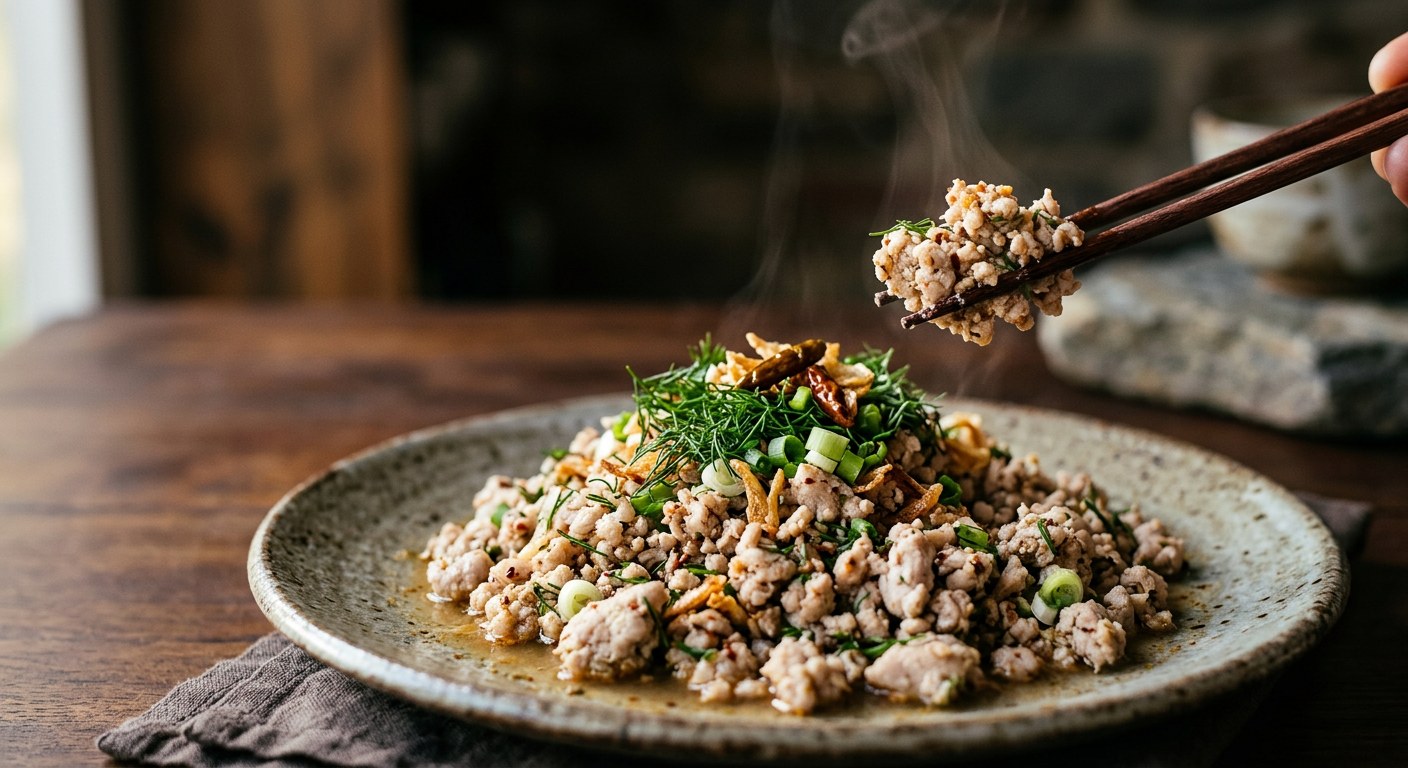
A fragrant northern Thai speciality where ground pork is stir-fried with aromatic spices until dry and deeply flavoured. Unlike raw Isaan laab, this Lanna version is fully cooked and perfumed with traditional northern spices like galangal and long pepper.
Ingredients
Main Ingredients
- 500g ground pork shoulder with some fat for moisture
- 200g pork skin or organs (liver, heart — optional but traditional)
- 3 tbsp fresh pork blood (optional, for richness and colour)
- 2 tbsp vegetable oil
Northern Laab Spices
- 2–3 tbsp northern laab chilli mix (พริกลาบเหนือ — essential ingredient)
- 1 tsp dried galangal powder (ข่าแห้งป่น)
- ½–1 tsp long pepper powder (มะแขว่นป่น — for authentic Lanna flavour)
- 2 tbsp fried garlic store-bought or homemade
Seasoning
- 1–2 tsp salt or light soy sauce
- Fish sauce to taste
- 2 tsp MSG (optional but traditional)
Fresh Herbs
- 3–4 sprigs fresh dill (ผักไผ่ — sliced)
- 3 spring onions, sliced
- Fresh coriander or parsley
- 3–4 kaffir lime leaves, finely sliced (optional)
- 3 bitter eggplants, sliced (มะเขือขื่น — optional)
Method
- Start the pork: Heat oil in a large wok or heavy pan over medium heat. Add the ground pork and stir-fry, breaking it up, until it starts to cook and release its juices.
- Add blood (if using): Pour in the pork blood and stir quickly to coat the meat. Continue cooking until the pork is fully cooked and the mixture becomes dry, not clumpy.
- Season lightly: Add salt or light soy sauce to taste — keep it light as you'll adjust later.
- Add the spices: Reduce heat to low. Add the northern laab chilli mix, dried galangal powder, and long pepper powder. Stir-fry until very fragrant and the spices release their oils — this is crucial for flavour.
- Add fried garlic: Stir in the fried garlic and continue cooking until the mixture is dry, crumbly, and intensely aromatic.
- Finish with herbs: Remove from heat and immediately add the fresh dill, spring onions, coriander, and lime leaves (if using). Toss gently to wilt the herbs without overcooking them.
Chef's Notes
- Essential spices: The northern laab chilli mix is non-negotiable — this blend of roasted chillies and spices defines the dish. Look for it in Thai grocery stores or online.
- Pork fat matters: Use pork with some marbled fat or add a little pork fat — this prevents the laab from becoming too dry and adds richness.
- Low heat for spices: Once you add the spice powders, keep the heat low to prevent burning. The goal is to release oils and develop fragrance.
- Texture goals: Perfect laab kua should be "dry and fragrant but not hard" — crumbly and aromatic, but still moist enough to eat easily.
- Fresh blood: If using pork blood, ensure it's very fresh and stir it in quickly to prevent curdling. It adds richness and authentic texture.
- Serving suggestions: Traditionally served with sticky rice, fresh vegetables (cucumber, cabbage), and sometimes grilled pork crackling (แคบหมู).
Where Thai Sources Disagree
Spice Mix vs Individual Spices
Convenience approach (Wongnai/siwalee): Uses pre-made northern laab chilli powder — just add and cook.
From-scratch approach (CookingHub, Cookpad): Lists individual spices including roasted dried chilli powder, galangal powder, long pepper, and sometimes curry paste.
Our take: We recommend the traditional spice mix for authenticity, but list individual components so you understand what creates the complex flavour profile.
Cooking Method
Spice-first method (Wongnai): Mix raw pork with spices before cooking to integrate flavours deeply.
Cook-then-season method (CookingHub): Cook pork first, then add spices at lower heat to prevent burning.
Our take: The cook-then-season approach gives more control over spice toasting and prevents the delicate powders from burning in hot oil.
Additional Ingredients
Simple version (Wongnai): Focus on pork, spices, and herbs — clean and straightforward.
Complex version (Cookpad): Includes organs, bitter eggplant, multiple herb types, and detailed spice blending.
Our take: We've made organs and blood optional while keeping the essential herb trio that defines northern laab.