Recipe · Thailand · Deep Fried
Kiao Tod (เกี๊ยวทอด)
Thai crispy fried wontons with spiced minced pork filling — golden, crispy wonton skins filled with aromatic pork seasoned with garlic, coriander root and white pepper.
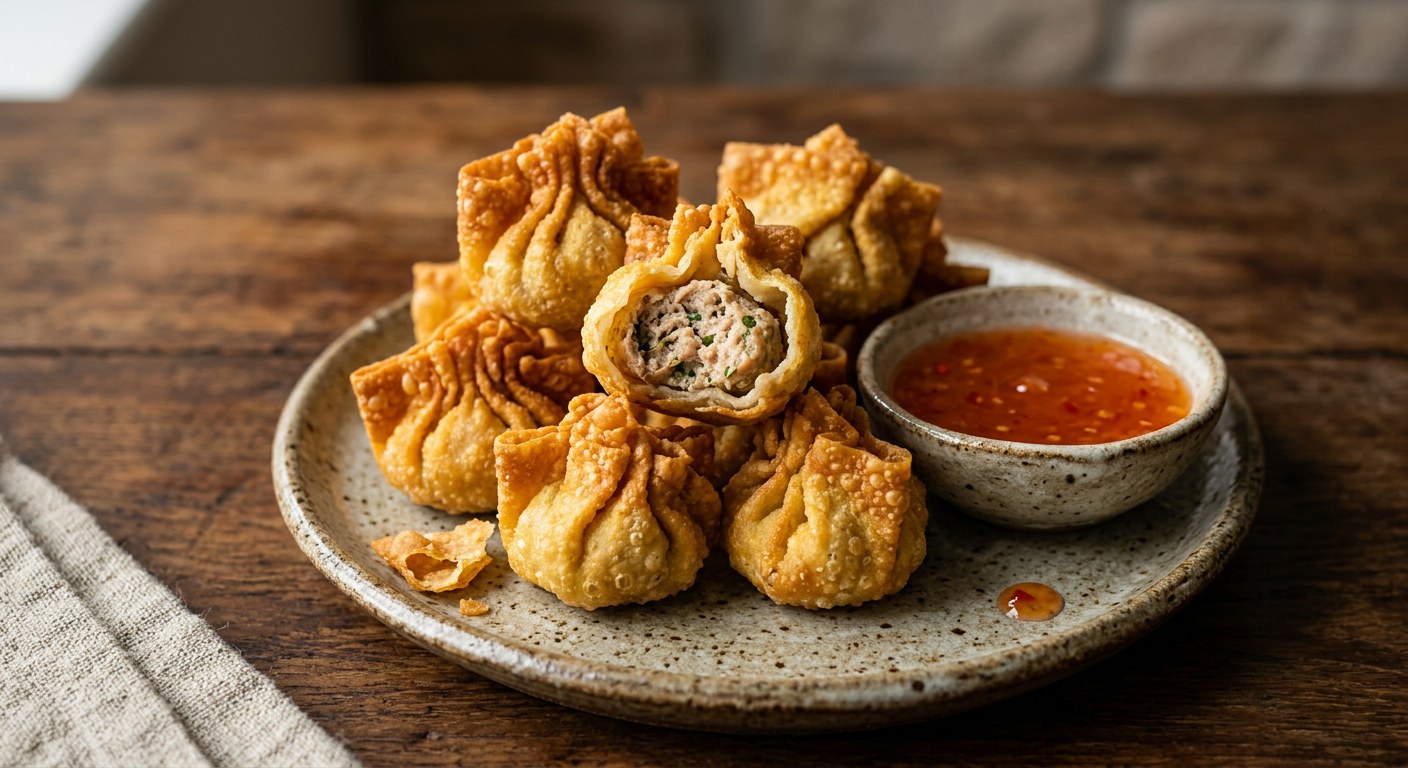
Thai crispy fried wontons with spiced minced pork filling — golden, crispy wonton skins filled with aromatic pork seasoned with garlic, coriander root and white pepper.
เกี๊ยวทอด
Golden, crispy wonton parcels filled with aromatic spiced pork — a beloved Thai appetizer where the contrast between the shatteringly crisp wrapper and the juicy, well-seasoned filling creates the perfect bite.
Fried wontons are Thai-Chinese street food at its finest, found at food courts, night markets, and as restaurant starters across Thailand. The magic lies in the balance: enough seasoning to make the pork filling sing with garlic and pepper, but light enough to let the crispy wrapper contribute its own wheaty crunch.
The dish showcases Thai cooks' mastery of texture contrasts — something that appears throughout the cuisine from som tam's mix of soft and crunchy to the interplay in boat noodles. Here, the instant textural shift from crisp shell to yielding interior creates that satisfying crack followed by the release of aromatic steam.
| Thai | English | Amount |
|---|---|---|
| หมูบด | Minced pork | 200g |
| รากผักชี | Coriander root | 4 stalks |
| กระเทียม | Garlic | 6 cloves |
| พริกไทยขาวเม็ด | White peppercorns | 1/2 tsp |
| ซีอิ๊วขาว | Light soy sauce | 1 tbsp |
| น้ำมันหอย | Oyster sauce | 1 tbsp |
| ซอสปรุงรส | Seasoning sauce | 1 tsp |
| พริกไทยป่น | Ground white pepper | 1/2 tsp |
| ต้นหอม | Spring onion | 1 tbsp, chopped |
| ไข่ไก่ | Egg, for binding | 1/2 beaten |
| แป้งมัน | Tapioca starch, for texture | 1 tsp |
| Thai | English | Amount |
|---|---|---|
| แผ่นเกี๊ยว | Wonton wrappers | 24 sheets |
| น้ำสะอาด | Water | for sealing |
| Thai | English | Amount |
|---|---|---|
| น้ำมันทอด | Vegetable oil | for deep frying |
The three-friends paste (สามเกลอ) — coriander root, garlic, and white pepper pounded together — forms the aromatic backbone. This combination appears across Thai cooking as the foundation for marinades, curry pastes, and seasoning mixes. Fresh coriander root has an intensely herbal, almost medicinal fragrance that dried versions can't match.
Filling consistency matters. The pork should be well-seasoned but not over-wet. Too much liquid causes the wrappers to become soggy and split during frying. The addition of egg and a touch of tapioca starch creates binding and gives the filling a slightly bouncy texture that contrasts nicely with the crisp exterior.
Wrapping technique requires restraint. Overfilling is the main cause of wrapper failure — aim for about a teaspoon per wonton. The edges must be properly sealed with water; any gaps will allow hot oil to enter and create greasy, blown-out parcels instead of neat triangles.
Frying temperature is critical. Too hot and the wrappers brown before the filling cooks through. Too cool and they absorb oil, becoming heavy and greasy. Around 170°C gives the perfect balance — hot enough for immediate sizzling and crisping, gentle enough for even cooking.
The basic pork recipe accepts many variations. Pork and prawn combinations add sweetness and a different texture — the prawns should be roughly chopped rather than minced smooth for textural interest. Street vendor versions often include finely diced water chestnuts for crunch.
Modern fusion approaches might use teriyaki and sesame oil instead of traditional Thai seasonings, creating a Japanese-Thai hybrid that works surprisingly well. Vegetarian versions can substitute mushroom mince seasoned with mushroom soy sauce and extra aromatics.
Some cooks add baking soda to create extra bounce in the filling — a technique borrowed from Chinese dim sum making. Others incorporate finely diced bamboo shoots or chopped peanuts for textural variety.
Sweet chilli sauce (น้ำจิ้มไก่) is the most common accompaniment — its sweet-tart profile balances the savoury filling without competing. Plum sauce (น้ำจิ้มบ๊วย) offers a more complex sweet-sour note with fruity undertones.
Three-flavour sauce (น้ำจิ้มสามรส) — the classic sweet, sour, and salty combination with chillies — provides more heat and complexity. Some modern restaurants serve them with spicy mayo or other fusion dips, though purists might object.
Wontons can be wrapped well ahead — even frozen for months. Fry directly from frozen, adding a minute or two to the cooking time. Fresh-wrapped wontons should be used within a few hours or they'll start to weep and soften the wrappers.
Once fried, serve immediately. Like most deep-fried foods, wontons lose their textural appeal quickly as steam softens the crispy shell from within. Plan your timing so they go straight from oil to table.
The appeal of kiao tod lies in their satisfying simplicity — familiar flavours elevated by perfect technique and that magical textural contrast that makes you reach for 'just one more' until the plate is empty.
This recipe is translated from the following Thai-language sources. Where they disagree, we've said so.
1. Cookpad Thailand (multiple recipes) — https://cookpad.com/th
2. Kapook7 — https://news.kapook.com/view214071.html
3. Thai Cooking by KP — https://www.kpthai.com
4. Pantip.com community — https://pantip.com
5. Phol Food Mafia (พล ตัณฑเสถียร) — https://pholfoodmafia.com
6. True ID Food — https://food.trueid.net
7. Wongnai Recipes — https://www.wongnai.com/recipes