Recipe · Thailand · Chicken Rice, Crisped

Khao Mun Gai Tod (ข้าวมันไก่ทอด)

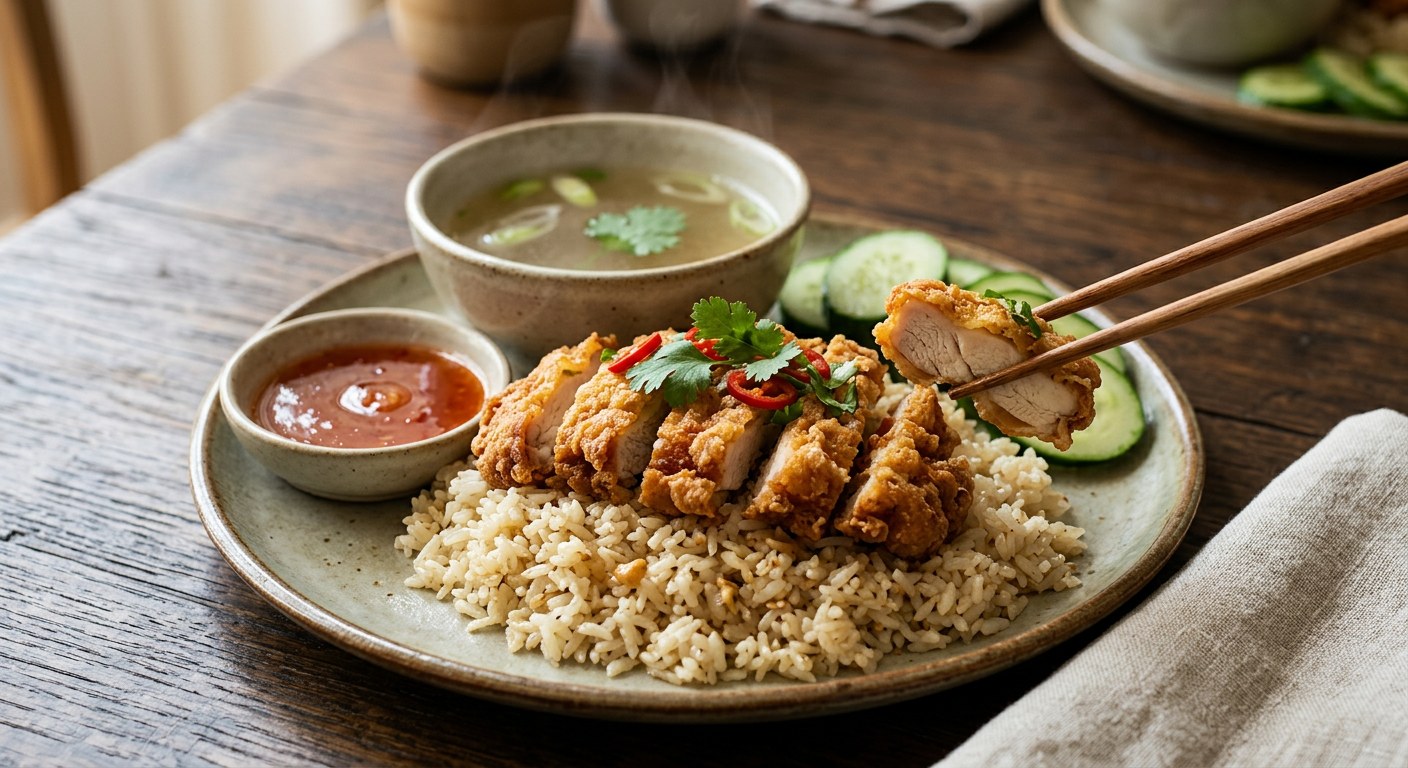
The fried-chicken sibling of khao man gai: the same garlic-ginger chicken-fat rice, under crisp battered chicken, with sweet chilli sauce instead of the fermented-soy dip.

Khao Mun Gai Tod — Garlic-ginger chicken-fat rice topped with crisp battered fried chicken, served with sweet chilli sauce,

Chicken Rice, Crisped

ข้าวมันไก่ทอด is khao man gai's louder sibling. The rice — jasmine cooked with garlic, ginger and rendered chicken fat — is the same ritual. What changes is the chicken: instead of the gentle poach, the meat is marinated, battered and deep-fried, and the sauce switches from the dark fermented-soy tao jiao dip to the sweet chilli sauce that belongs with anything fried. Five Thai sources agree on that skeleton, and argue about almost every detail on top of it.

The home version here comes from a Wongnai home cook: a coriander-root-garlic-peppercorn paste rubbed into boneless thigh, a three-hour fridge marinade, a wet batter of two flours loosened with ice-cold water, and a rice cooker that does the rice work. It is deliberately plain — bought sweet chilli sauce, cucumber, winter melon soup — the way most Thai kitchens actually serve it.

The shop version goes further. ครัวพิศพิไล's batch recipe on TrueID makes everything from scratch: a proper chicken stock simmered with daikon, a rice blend of jasmine and Sao Hai grains, chicken breast double-dredged egg-flour-egg for a thick crust, and a cooked sweet-sour chilli sauce — sugar, vinegar, garlic, red and spur chillies — simmered to a syrup. That sauce is the one component every home recipe quietly outsources to a bottle.

The Recipe (home version, from Wongnai)

ThaiEnglishAmount
สะโพกไก่เลาะกระดูกChicken thigh, boneless500 g
รากผักชีCoriander roots3
กระเทียมจีนGarlic5 cloves
พริกไทยขาวเม็ดWhite peppercorns1/4 tsp
ซอสปรุงรสSeasoning sauce1 tbsp
เกลือสมุทรSea salt1 tsp
แป้งสาลีเอนกประสงค์Plain flour1/2 cup
แป้งทอดกรอบCrispy frying flour1/4 cup
น้ำเย็นจัดIce-cold water3/4 cup
น้ำมันพืชVegetable oilfor deep-frying
ข้าวหอมมะลิเก่าAged jasmine rice2 cups
ขิงฝานGinger, sliced5 slices
กระเทียมจีน (สำหรับข้าวมัน)Garlic, for the rice5 cloves
น้ำตาลทรายSugar2 tsp
พริกไทยป่นGround pepper1/2 tsp
น้ำมันงาSesame oil1 tsp
น้ำมันพืช (สำหรับข้าวมัน)Vegetable oil, for the rice2 tbsp
รากผักชี (สำหรับข้าวมัน)Coriander roots, for the rice3
เกลือสมุทร (สำหรับข้าวมัน)Sea salt, for the rice1 tsp
กระเทียมเจียวFried garlic1 tbsp
น้ำซุปกระดูกไก่Chicken stock2 1/2 cups
น้ำจิ้มไก่Sweet chilli sauceto serve
แตงกวาCucumberto serve
น้ำซุปฝักเขียวWinter melon soupto serve

The selling batch (TrueID / ครัวพิศพิไล): 5–6 L water, 1.5 kg chicken carcasses, daikon, rock sugar and stock cubes for the soup; 750 g rice (550 g jasmine + 200 g Sao Hai); 1 kg chicken breast marinated in egg white and salt, double-dredged flour-egg-flour; scratch sauce from 80 g sugar, 1 tbsp vinegar, 2 tbsp each chopped garlic, red and spur chillies, 50 g water. The volcano (Sanook's พี่หมี): rice fried in rendered chicken-skin fat with pandan, then the chicken marinated with sam kloer paste and seasoned flour mix stirred straight in. The KFC home route (Bloggang): a 15-minute salt brine, flour-salt-pepper dredge, egg dip, second dredge, fried at 180 °C, served with bottled Pantainorasingh sweet chilli and ketchup.

The Method

  1. The paste. Pound the coriander roots, garlic and white peppercorns fine; rub into the chicken with the seasoning sauce and salt; marinate in the fridge three hours.
  2. The rice. Rinsed rice into the rice cooker with the ginger, garlic, sugar, pepper, sesame oil, vegetable oil, coriander roots, salt and fried garlic. Stock in, stir once, cook twenty minutes; fluff, then ten minutes more.
  3. The batter. The two flours mixed with ice-cold water — the chill is what keeps the crust crisp — and the marinated chicken dipped through it.
  4. The fry. Medium-heat oil, no rush: golden and crisp on both sides, then drain.
  5. The plate. Chicken sliced across the grain onto the rice; sweet chilli sauce, cucumber and winter melon soup alongside.

Where Thai Sources Disagree

The cut. Breast (TrueID's shop batch) or boneless thigh (Wacheerat, Sanook, Flewless) or drumsticks (Bloggang). Thigh is the home consensus; breast is the lean-batch commercial choice.

The coating. Four different systems. A wet batter of plain flour, crispy frying flour and ice-cold water (Wacheerat). The flour mix — plain, crispy and cornflour — stirred straight into the marinated chicken with water (Sanook). A dry double-dredge of flour, egg, flour again (TrueID and Bloggang). Or just crispy frying flour mixed with salt, patted on thick (Flewless).

The marinade. The herb paste — coriander root, garlic, peppercorn, the "sam kloer" trio — plus seasoning sauce (Wacheerat, Sanook). Just egg white and salt (TrueID). Or a fifteen-minute salt brine (Bloggang). The paste is the aromatic school; the others chase texture and salt.

Pre-cooking the chicken. Only Flewless boils the meat two minutes and steams it five — about 70% cooked — before flouring and frying. Everyone else fries the raw marinated chicken. It is a safety shortcut, not the norm.

The sauce. Only TrueID makes the classic cooked sweet-sour chilli sauce from scratch. Flewless dresses with fermented soybean paste and soy sauce. Wacheerat, Sanook and Bloggang all reach for a bought sweet chilli sauce — Mae Pranom or Pantainorasingh — which is the honest home answer.

Rice aromatics. Garlic and ginger everywhere. Pandan only in Sanook and Bloggang. Sesame oil only in Wacheerat. Olive oil in the two farang-kitchen sources (Flewless, Bloggang). TrueID and Flewless blend jasmine with the cheaper Sao Hai grain — the shop trick for fragrance at bulk prices.

The fat. Chicken skin rendered in the rice pot (TrueID, Sanook, Bloggang) against plain oil (Wacheerat, Flewless). The rendered-skin route is the traditional one.

Frying heat. "Very hot" (TrueID), medium (Wacheerat, Sanook), medium-low (Flewless), or a stated 180 °C (Bloggang). The batter versions tolerate medium; the dry-dredge versions want the heat.
How Western Versions Get It Wrong

UK Ingredient Notes

Sources

This recipe is translated from the following Thai-language sources. Where they disagree, we've said so.

1. Wongnai (Wacheerat Kangsanant) — "สูตร ข้าวมันไก่ทอด" (the recipe used here) — wongnai.com

2. TrueID (ครัวพิศพิไล) — "ทำขายกำไรดี! สูตรข้าวมันไก่ทอด ไก่กรอบ ข้าวอร่อย น้ำจิ้มดี เปิดร้านได้เลย" (the from-scratch shop batch) — food.trueid.net

3. Sanook — "วิธีทำ ข้าวมันไก่ทอดภูเขาไฟ ไก่กรอบนอกนุ่มใน ข้าวมันหอมนุ่ม" (the volcano version) — sanook.com

4. Wongnai (冰Flewless) — "สูตร ข้าวมันไก่ทอด" (the par-cooked chicken version) — wongnai.com

5. Bloggang (We Are From Belgium) — "ข้าวมันไก่ & ข้าวมันไก่ทอด (แบบเคเอฟซี) : เมนูไก่ ๆ ฉบับไกลบ้าน" (the expat-home KFC-style version, with its linked ไก่ทอดคล้าย KFC recipe) — bloggang.com

Johnny Tiger
Johnny researches and translates Thai recipes from Thai-language sources — chefs, restaurants and home cooks in Thailand — and publishes them with their sources cited. No westernised shortcuts, no invented steps.