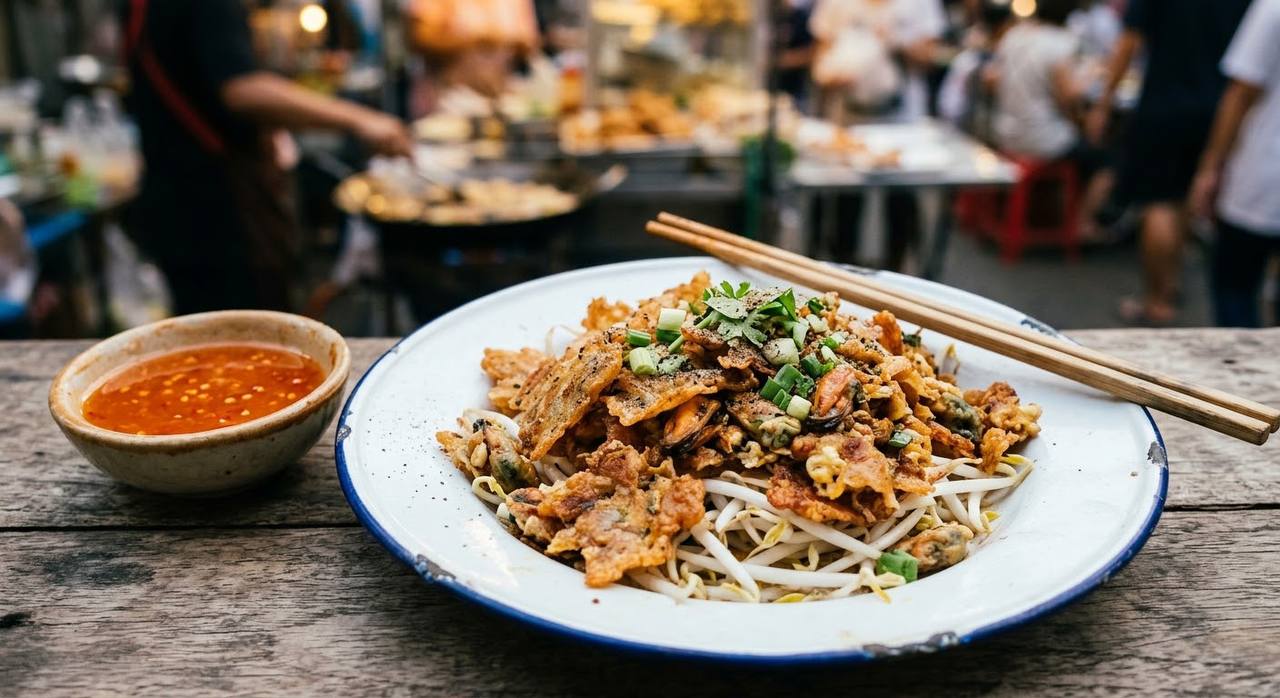
Mussels in a three-flour batter, fried until the edges shatter, egg broken over and torn into shards — on a bed of bean sprouts, under a squirt of sweet chilli. The street-stall pancake.
หอยทอด — literally "fried mussels" — is the dish of the big flat griddle, and the Kapook source opens by naming the shrines: หอยทอดชาวเล, นายหมง, เยาวราช — the stalls people queue for. What they queue for is a textural contradiction: a batter that is soft in the middle and shatteringly crisp at the torn edges, studded with mussels, an egg spread over the top, and a sauce that is half sweet chilli and half sriracha.
The crisp is engineered, not lucked into. The source batter runs on three flours: crispy frying flour for the shatter, rice flour for the structure, and แป้งเท้ายายม่อม — arrowroot starch — for a crunch that holds. Then the recipe's quiet secret: น้ำปูนใส, clear lime water, two spoonfuls that keep the crisp alive longer — the same calcium-lime solution Thai cooks use to keep frying batters and desserts firm. The source marks it optional for those who can't get it; the crisp survives either way, just not as long.
And one instruction defines the whole dish: don't keep it as one sheet. Break the pancake into pieces in the pan and keep flipping — "ชิ้น ๆ แยกตัวกัน จะทอดได้กรอบมากยิ่งขึ้น" — separate pieces fry crisper. The pancake arrives as golden shards over a tangle of bean sprouts, sauce on the side.
| Thai | English | Amount |
|---|---|---|
| หอยแมลงภู่ | Mussels, shelled | 1 cup |
| ไข่ | Eggs | 2 |
| ต้นหอมซอย | Spring onions, chopped | 2 tbsp |
| ถั่วงอก | Bean sprouts | 1 cup |
| แป้งทอดกรอบ | Crispy frying flour | 4 tbsp |
| แป้งข้าวเจ้า | Rice flour | 2 tbsp |
| แป้งเท้ายายม่อม | Arrowroot starch | 3 tbsp |
| ผงปรุงรส | Seasoning powder | 1 tsp |
| พริกไทย | Ground pepper | 1 tbsp |
| ซอสปรุงรส | Seasoning sauce | 1 tbsp |
| น้ำมันพืช | Vegetable oil | 3 tbsp |
| น้ำเปล่า | Water | 1/2 cup |
| น้ำปูนใส | Clear lime water (optional — keeps the crisp longer) | 2 tbsp |
| น้ำจิ้มไก่ + ซอสพริก | Sweet chilli sauce + sriracha (the dipping sauce) | 4 + 2 tbsp |
The flour blend. Kapook: crispy flour + rice flour + arrowroot. One Pantip home cook: corn starch + crispy flour. Another, cooking abroad: plain wheat + rice + corn flour. Every kitchen rebuilds the crisp from what's in the cupboard — the goal is the same shatter.
Lime water. Kapook's น้ำปูนใส is the professional trick for a crisp that lasts; the Pantip versions skip it entirely. Both are published as correct.
The sauce. Kapook mixes ready-made sweet chilli and sriracha — "อร่อยแบบคนไกลบ้าน", delicious even far from home. Some Pantip cooks build the sauce from scratch; the flavour target is the same sweet-hot tang.
Fresh vs blanched mussels. The Pantip cooks insist fresh, raw mussels fry better than pre-blanched ones — and their cleaning method is the careful one: pull the byssus thread out, wash, then rest the meat in a sieve in the fridge so the water drains and the mussels stay firm.
One sheet or many shards. Kapook breaks the pancake up deliberately — more edges, more crisp. The street stalls serve the shards piled; a whole round pancake is the polite restaurant version.
This recipe is translated from the following Thai-language sources. Where they disagree, we've said so.
1. Kapook (ครัวตุ๊กตา) — "หอยทอด สูตรแป้งกรอบนานทำเองง่าย ๆ ที่ครัวบ้าน พร้อมน้ำจิ้มสูตรพิเศษ" (the three-flour + lime-water version used here) — cooking.kapook.com
2. Pantip (ครัวตุ๊กตา) — "หอยทอดร้อน ๆ กรอบ ๆ ทำเองได้ค่ะ" (the same cook's two-plate home version) — pantip.com
3. Pantip — "มาทำหอยทอด แบบง่าย ๆ ไว้ทำกินที่บ้าน" (corn-starch and crispy-flour blend, 4 servings) — pantip.com
4. Pantip — "หอยทอด กรอบนอกนุ่มใน ไม่ง้อแป้งทอดกรอบ" (no-crispy-flour blend, plus the byssus-removal and fridge-dry cleaning method) — pantip.com