Recipe · Thailand · The Kaeng That Isn't a Curry

Fak Thong Kaeng Buat (ฟักทองแกงบวด)

Pumpkin simmered in sweetened coconut milk with pandan — four ingredients, one pot, and the dessert Thailand serves from temple fairs to hospital wards.

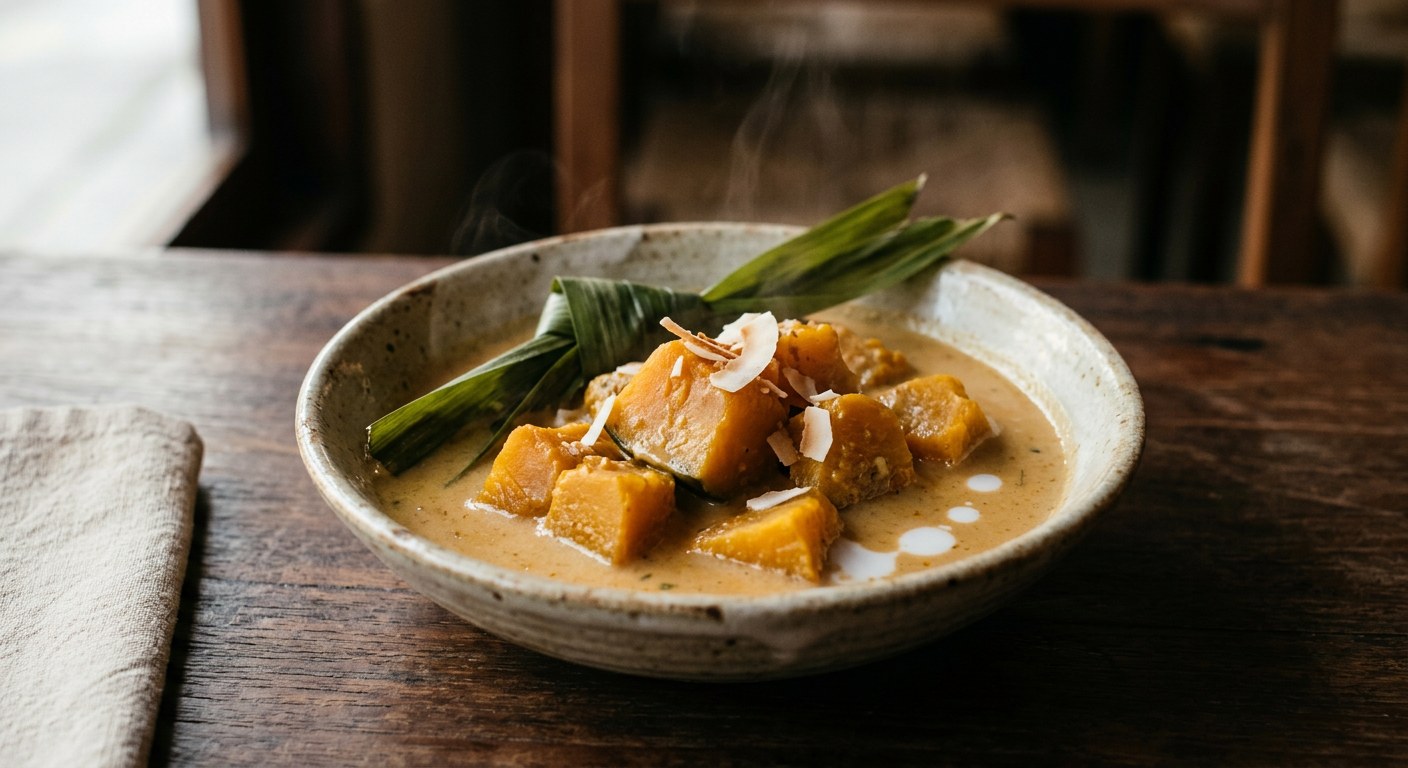
Fak Thong Kaeng Buat — Pumpkin cut into pieces and simmered in coconut milk sweetened with palm sugar, scented with pandan and

The Dessert Family Named After the Pot

ฟักทองแกงบวด — the sources print it both ways, แกงบวดฟักทอง is just as common — is the pumpkin member of the kaeng buat family, Thailand's group of desserts where fruit and roots are simmered in sweetened coconut milk: banana (กล้วยบวชชี), taro, sweet potato, young coconut. The name says exactly what happens: บวด means to simmer gently in sweet coconut milk, and แกง here carries none of the curry-paste weight it has elsewhere in the language. A ripe pumpkin, palm sugar, coconut milk, pandan and salt — that is the whole dish.

The difference between a good bowl and a mushy one is decided before the pot goes on. Three of our six sources soak the cut pumpkin in น้ำปูนใส, lime water, before cooking — 30 minutes (Kapook), 30–60 (Wongnai), a full hour (Aroifin) — so the flesh stays firm and glossy instead of collapsing. Wongnai adds its rule: once the pumpkin is in, do not stir too often, or it breaks up. And ครูดอกหญ้า on TrueID goes further — after the sugar goes in she does not stir at all.

The pumpkin matters as much as the technique. ครูดอกหญ้า's guide: it must be mature (แก่จัด) and a local variety — the sweet type runs orange right through to the skin; the starchy type shows a green ring inside the rind and, she warns, falls apart in the pot. And the dish has a soft-power side: Kapook has a nursing-mother version, because Thais believe pumpkin increases breast milk — alongside loofah and banana blossom — so she swaps the coconut milk for skimmed milk entirely.

The Recipe (home version, from Wongnai)

ThaiEnglishAmount
ฟักทองPumpkin600 g
กะทิCoconut milk450 ml
น้ำตาลปี๊บPalm sugar100 g
เกลือSalt½ tsp
ใบเตยPandan leaves4 leaves

The classic two-coconut batch (Aroifin, 6 servings): 1 kg pumpkin, 800 g pasteurised coconut milk, 200 g coconut sugar, 2/3 tsp salt, 3 tied pandan leaves, 400 g water, and a 1-hour lime-water soak — one part of the milk is thinned with water to cook the pumpkin, and the reserved thick cream goes in at the end. The no-lime-water bowl (TrueID, ครูดอกหญ้า): 1 kg mature pumpkin, 400 g white sugar, 1 tsp salt, 500 g coconut milk heated until the oil breaks, 500 g water — no pandan, no soak, finished with fresh coconut milk drizzled on top. The nursing-mother bowl (Kapook): 300 g pumpkin in 500 ml skimmed milk with 40 g white sugar, 40 g palm sugar, 2 pandan leaves and a pinch of salt — the folk-medicine version with no coconut at all.

The Method

  1. The pumpkin. Peel, scoop out the seeds and cut into bite-size pieces — ครูดอกหญ้า cuts rectangles, "not too small". For firmer flesh, soak in lime water 30–60 minutes and rinse well (Wongnai, Kapook, Aroifin); with a truly mature pumpkin she skips the soak entirely.
  2. The sweet milk. Wongnai pours the coconut milk, palm sugar, salt and pandan into the pot together and heats on medium until the sugar dissolves. Aroifin's classic goes the other way: one part coconut milk thinned with water into หางกะทิ — the thin milk — plus the sugar, salt and pandan, over low heat.
  3. The simmer. When the milk boils, add the pumpkin, cover the pot and boil about 10 minutes until the flesh softens (ครูดอกหญ้า). Wongnai's rule stands: do not stir too often, or the pumpkin goes to mush.
  4. The seasoning. ครูดอกหญ้า adds the salt first, then the sugar, then does not stir — she covers the pot and waits for the second boil before tasting and adjusting the sweet-salty balance.
  5. The finish. Aroifin pours in the reserved thick coconut milk, หัวกะทิ, and heats it through without letting it boil; ครูดอกหญ้า ladles into bowls and drizzles fresh coconut milk on top. Serve warm — Wongnai's word for the moment the bowl lands is "ชื่นใจ", the feeling of being refreshed to the heart.

Where Thai Sources Disagree

The sugar. Wongnai uses น้ำตาลปี๊บ, palm sugar; Kapook and Aroifin use น้ำตาลมะพร้าว, coconut sugar — the same deep-caramel idea, pressed into different shapes. TrueID's ครูดอกหญ้า uses 400 g of plain white sugar and Yummy3 five tablespoons; Kapook's milk version splits the difference, 40 g white and 40 g palm.

Lime water or not. Wongnai (30–60 minutes), Kapook and Kapook-milk (30 minutes) and Aroifin (1 hour) all soak the pumpkin in น้ำปูนใส to keep the flesh firm. ครูดอกหญ้า skips it entirely and says so — her position is that a truly mature pumpkin does not need it. The soak is insurance, not law.

Coconut milk or cow's milk. Five of six sources cook in coconut milk. Kapook's nursing-mother recipe swaps in 500 ml of skimmed milk, on the Thai folk belief that pumpkin increases breast milk — same name, same technique, a very different bowl.

One milk or two. Aroifin keeps the classic two-stage build: thin milk (หางกะทิ) cooks the pumpkin, then the thick head cream (หัวกะทิ) goes in at the end and is never boiled. Wongnai and Kapook cook everything in a single pot. ครูดอกหญ้า starts by heating the coconut milk until the oil breaks (เคี้ยวจนแตกมัน) before diluting it with water — a street-stall trick that deepens the flavour.

Water. Wongnai adds none at all; Kapook matches the milk with equal water; Aroifin thins with 400 g; TrueID uses 500 g. It is the richness dial — no water gives the richest, most dessert-like bowl.

The topping. Only ครูดอกหญ้า finishes each bowl with a drizzle of fresh coconut milk on top; everyone else serves the pot as it is.
How Western Versions Get It Wrong

UK Ingredient Notes

Sources

This recipe is translated from the following Thai-language sources. Where they disagree, we've said so.

1. Wongnai — "แจกสูตรฟรี 'แกงบวดฟักทอง' เมนูขนมไทยรสกลมกล่อม ทำง่าย ๆ ไม่กี่ขั้นตอน!" (the recipe used here) — wongnai.com

2. Kapook Cooking — "วิธีทำแกงบวดฟักทอง สูตรขนมไทยง่าย ๆ อร่อยหอมมัน" (the lime-water soak and the water ratio) — cooking.kapook.com

3. Kapook Cooking — "แกงบวดฟักทองนมสด ขนมไทยเรียกน้ำนมสำหรับคุณแม่" (the nursing-mother milk version) — cooking.kapook.com

4. TrueID Food — "แจกสูตรแกงบวดฟักทองหอมมัน by ครูดอกหญ้า" (pumpkin selection, the no-lime-water method, the kathi-breaking trick) — food.trueid.net

5. TrueID Food — "แจกสูตรบวดฟักทอง ขนมไทยทำง่าย หอมมัน อร่อยมาก มีคลิป Yummy3" (the three-step version) — food.trueid.net

6. Aroifin — "วิธีทำ ฟักทองแกงบวด หอมมันกะทิ หวานกำลังดี ทำง่าย" (the classic two-coconut build) — aroifin.com

Johnny Tiger
Johnny researches and translates Thai recipes from Thai-language sources — chefs, restaurants and home cooks in Thailand — and publishes them with their sources cited. No westernised shortcuts, no invented steps.